
Leila Bozorg ’04 Wants to Change How New York Does Housing
When Leila Bozorg ’04 lived in Greenpoint, Brooklyn, her bedroom was a converted corner at the top of a shared loft space, carved out of an old warehouse. “It felt a little bit like living in a treehouse,” she says. She later moved to a one-bedroom apartment in Fort Greene—“small, but sufficient.” She’s matter of fact about the trade-offs that come with living in New York City, but having a place to call home isn’t up for negotiation: When you can’t afford a home, she says, you cannot fathom a life of dignity and security.
That idea has shaped her career in public service. Today, Bozorg holds one of the most impactful jobs in New York City government. As deputy mayor for housing and planning under Mayor Zohran Mamdani, Bozorg was key to crafting a housing plan announced earlier this year that calls for building and preserving 400,000 affordable homes in one of the country’s tightest housing markets.
Reaching this point in her career, she says, wasn’t the culmination of a long, deliberate plan. “What worked for me is to stay very curious and find the things that interest you and pursue them.”
As a government major at Wesleyan, a pivotal moment came after a professor recommended that she read Amartya Sen’s Development as Freedom. The book reframed progress for her not as simply rising incomes of a nation, but as removing barriers to living with dignity. But an English course, Writing About Place, left the deepest mark, pushing her to grapple with what it means to work in communities that are not your own—“a critical question in public service,” she says, “when the scale [and impact] of what you're working on is so large and wide.”
During her time at Wesleyan, she embarked on a summer internship at the National Trust for Historic Preservation—her first exposure to policy work—then a year in Ahmedabad, India, with the America India Foundation. She’d assumed her career would lead into international development, but the experience redirected her: The complexity of the social, political, economic, and environmental issues playing out in one of India's mid- to large-sized cities, she says, exposed her to many of the themes and issues urban planners grapple with daily. The experience ultimately shaped an interest in housing that led her to earn a master’s degree in city planning.
Since then, Bozorg has spent nearly two decades in the field. During the Obama administrations, she spent four years in D.C. working at the US Department of Housing and Urban Development. She relocated to New York in 2014, where she moved through housing roles across three consecutive mayoral administrations, including her current role in the Mamdani administration. That stretch included leading neighborhood planning at the city’s housing agency, where she and her colleagues developed a four-part engagement framework—organize, learn, create, finalize—for cocreating neighborhood plans with communities. She credits former leaders who modeled for her what it looks like to steer such a complex, high-stakes system, and the emotional acumen it takes to get large groups of stakeholders to agree to move in the same direction.
“It’s always been about having a sense of curiosity about the world, an interest in complex systems, and a drive to make good use of our time on Earth and contribute.”
Today, city leadership continues to grapple with the stark facts of the city’s housing crisis. New York's rental vacancy rate sits at 1.4%, functionally zero for renters searching for housing. More than 90,000 New Yorkers—nearly 30,000 of them children—sleep in city shelters on any given night, while public housing residents live amid $78 billion in unmet capital repairs, meaning mold, leaks, broken elevators, and apartments without heat or hot water for days at a time.
“While these numbers are big, I truly believe they are not intractable,” Bozorg says. “They’re symptoms of public policy decisions—which means they can be improved by public policy decisions as well.”
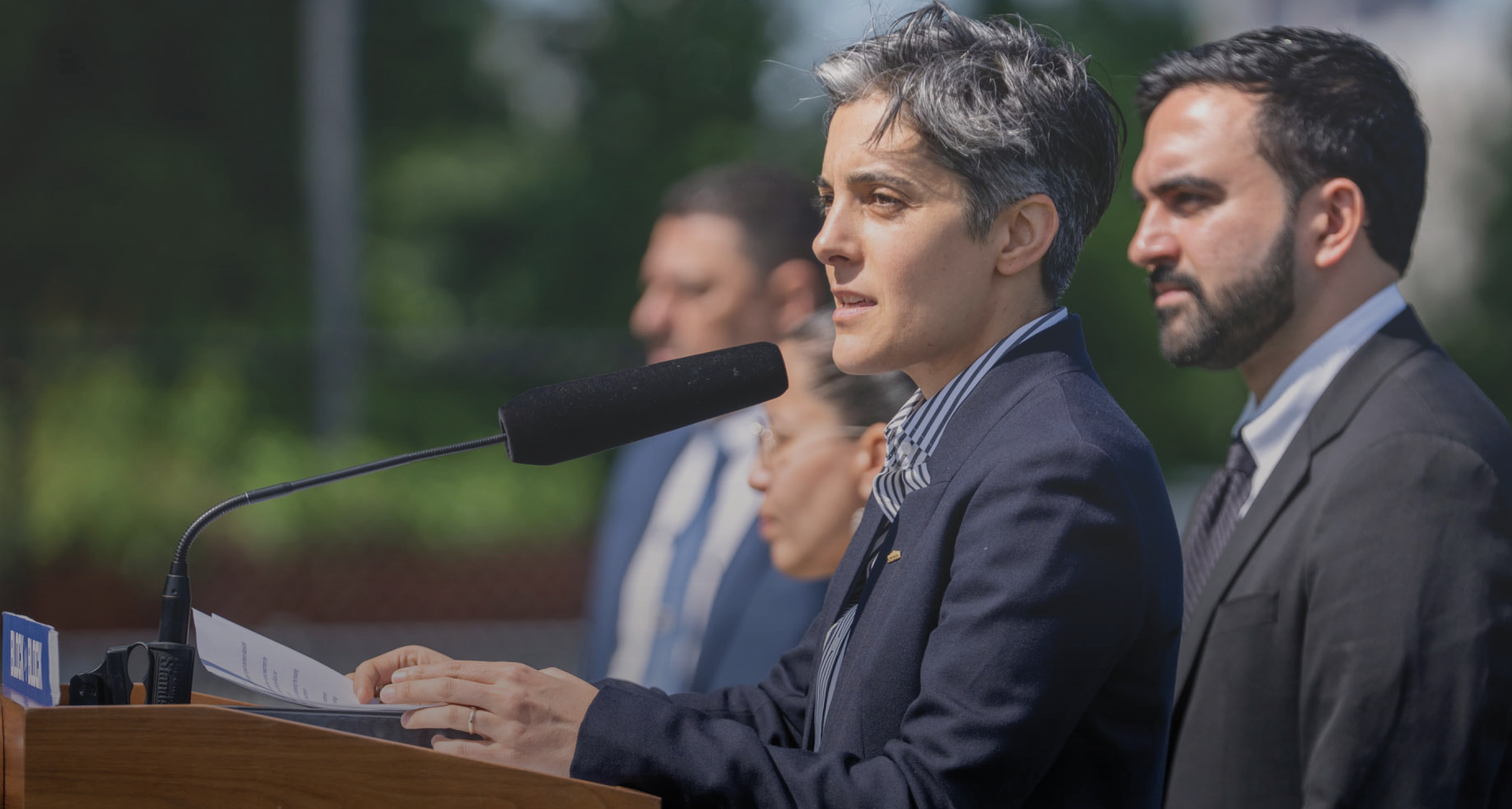
Earlier this year, the mayor’s office released Block by Block, a plan to build and preserve 400,000 affordable homes over the next decade—the most ambitious housing push in New York’s modern history, backed by a preliminary $22 billion capital commitment. “It’s quite wide-reaching in its ideas, but it’s also backed up with real resources and real [strategies],” she says.
Crafting the plan's 111 pages drew on the same processes Bozorg honed as a neighborhood planner: meetings with city agencies, tenant and advocacy groups, and developers, and then translating their ideas and concerns into strategies that reflect realistic constraints. One of the plan’s more novel tools is a revolving loan fund, in which the city provides lower-cost financing to housing developments in exchange for a share of the returns, reinvested into future projects—already moving two projects through the pipeline, including a 2,056-unit replacement-housing project for public housing residents in Chelsea.
Ask Bozorg who she’s building for, and the answer resists easy categorization: New York City Housing Authority residents facing the worst conditions, but also the union members, the teachers, the civil servants priced out of stable homes. As these efforts unfold, she reflects on the roads that led her here, and how pursuing genuine passions can help serve the greater good. “It was the culmination of experiences and opportunities that Wesleyan provided that have contributed greatly to my ability to be where I am today,” she says. “It’s always been about having a sense of curiosity about the world, an interest in complex systems, and a drive to make good use of our time on Earth and contribute.”
Lead image: At an event in Astoria, Queens, last May, Bozorg and Mamdani introduced the administration’s Block by Block plan. Photo: Ed Reed/Mayoral Photography Office.