
Student Discovers Democracy at the Neighborhood Level
As part of my internship with New York State Senator Robert Jackson, I helped host “Senator on Your Corner” events. On a handful of occasions throughout the summer, Jackson, his staff, my fellow interns, and I would go to a major neighborhood in the district and place a table in the corner of a street. It wasn’t anything fancy; all it took was a table, a few chairs, and a few hours of the Senator’s time, but it showed me that when your priority is listening to the community, you are naturally upholding the principles of democracy.
There, we would distribute information about free summer meals, affordable housing applications, reduced-fare transportation, and other resources. Most importantly, we would talk to constituents. Anybody could come to speak to the senator about any of their concerns, no matter how small. Jackson and his staff would listen intently and do whatever we could to help them. Often this meant making a referral or setting up a follow-up meeting, but it never meant turning people away.
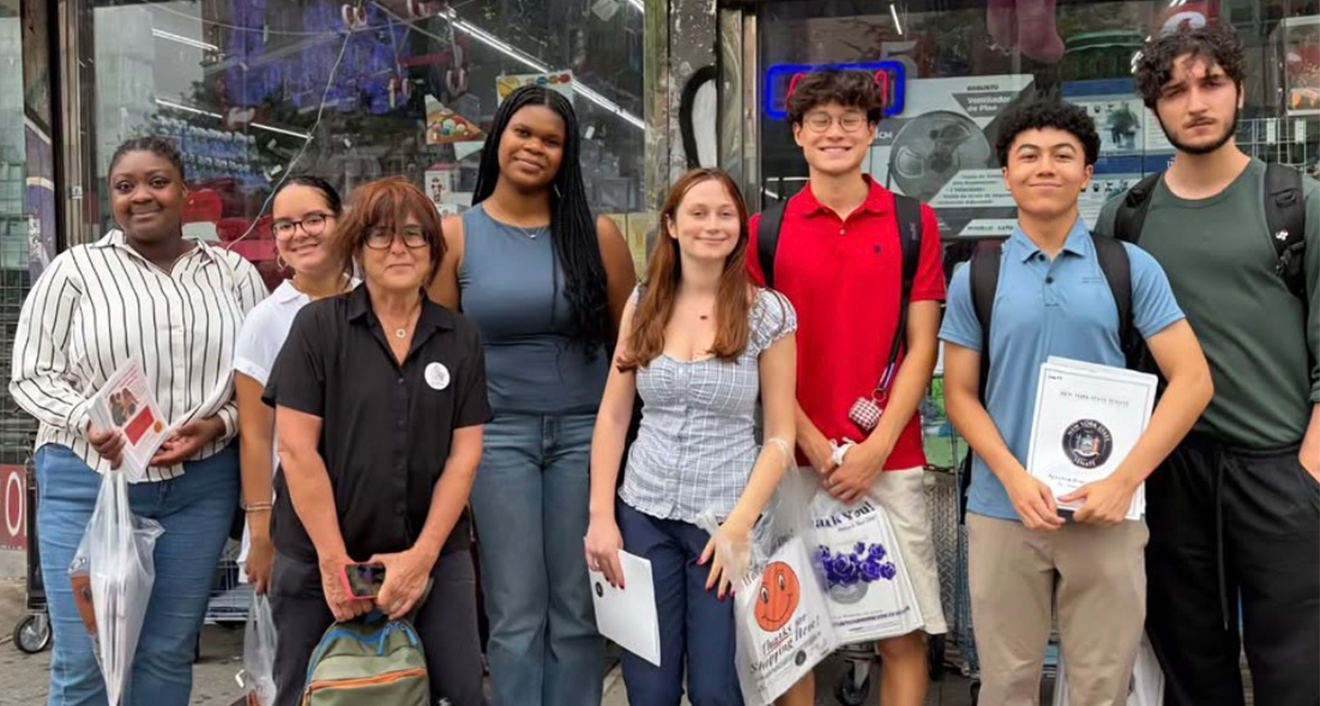
Oftentimes, elected officials, those meant to represent us, feel far away and inaccessible. Underrepresented communities often do not know how to make their voices heard by politicians or how to access government resources. Jackson’s team doesn't put the burden on constituents to find him; instead, he goes to them.
In a typical workday, I would walk over from my apartment in Washington Heights to the Inwood office and start by having a daily meeting with the five other interns. We were tasked with answering calls from constituents, emailing with community-based organizations, staying up-to-date with staff, and creating and organizing materials. In the afternoon, we would go into the community to canvass, with a focus on making sure tenants knew their rights, or going business-to-business, handing out information on how to handle an interaction with United States Immigration and Customs Enforcement (ICE).
In Jackson’s office, I learned to put my focus on tasks that help solve constituents’ problems. During my time in Jackson’s office, there was a contentious primary election in our district that garnered a lot of media coverage. Jackson was up for reelection during the time I was there. However, at no point did he or his staff even mention the election or campaigning; instead, they focused on making constituents their priority and supporting community-based organizations.
As an education studies and government double major, I learned many things at Wesleyan that helped prepare me for my work in Jackson’s office. In Associate Professor of Government Alyx Mark’s GOVT371: Judicial Decision-Making class, we discussed the purposes of the law and how the judicial system works. As part of my internship, we got to meet with the Washington Heights District Attorney’s office about issues facing our community. We learned about how the office supports victims of domestic abuse and partners with community-based organizations and social workers in our neighborhood.
In EDST230: Schools in Society, we discussed the way state policies determine school conditions and experiences, including the importance of equipping teachers with the knowledge and skills to meet the changing needs of children. During my internship, I worked with Jackson’s other interns on a legislative advocacy project, focused on bill S1025, which would require licensed public school teachers to have immigrant-specific, trauma-informed training. We researched the bill and presented a proposal to our staff. Our district has a huge immigrant population, and many of these students do not feel comfortable and safe in our public schools. We knew it was crucial that the bill pass so that teachers could get the training they need.
Participating in public life ensures that our government is doing its job and representing its citizens. Getting the chance to listen and learn from my community was a gift, everyone we spoke to expressed how much it meant to them that someone in government actually cared. When senators are truly in our corner, it helps democracy work and our community thrive.