Pitch Perfect
Necessity may be the mother of invention, but for Nick Dargel ’28, the source of inspiration was “my own personal suffering.” A baseball player, Dargel had been prone to chronic shoulder and elbow pain since the sixth grade. Seeking treatment as a senior in high school, he learned that tightness in the subscapularis—a muscle located under the arm on the front side of the shoulder blade—was to blame. Sessions with the physical therapist involved applying pressure to that hard-to-reach muscle using an improvised bit of PVC pipe with a towel taped to the end. Really? Dargel thought. You’re a medical professional and this is the best tool you’ve got?
There had to be a better way to massage a muscle so crucial to the act of throwing. Months later, as a first-year student at Wesleyan, Dargel invented the ScapStick, the first tool specifically designed to release the subscapularis. He began marketing it to Division I college baseball teams and players for use in warmups and postgame recovery to enhance mobility and support injury prevention. Entering his sophomore year, Dargel was eager to bring investors on board to help him scale up his fledgling business. And for that he needed what every startup founder must have—a good pitch.
The business pitch is a deceptively simple concept: Make the case to angel investors or venture capitalists that your company is worth backing. In practice, a founder has just two minutes to tell the story of their startup, explain how their product works, and inspire confidence that the business is sound. Easier said than done.
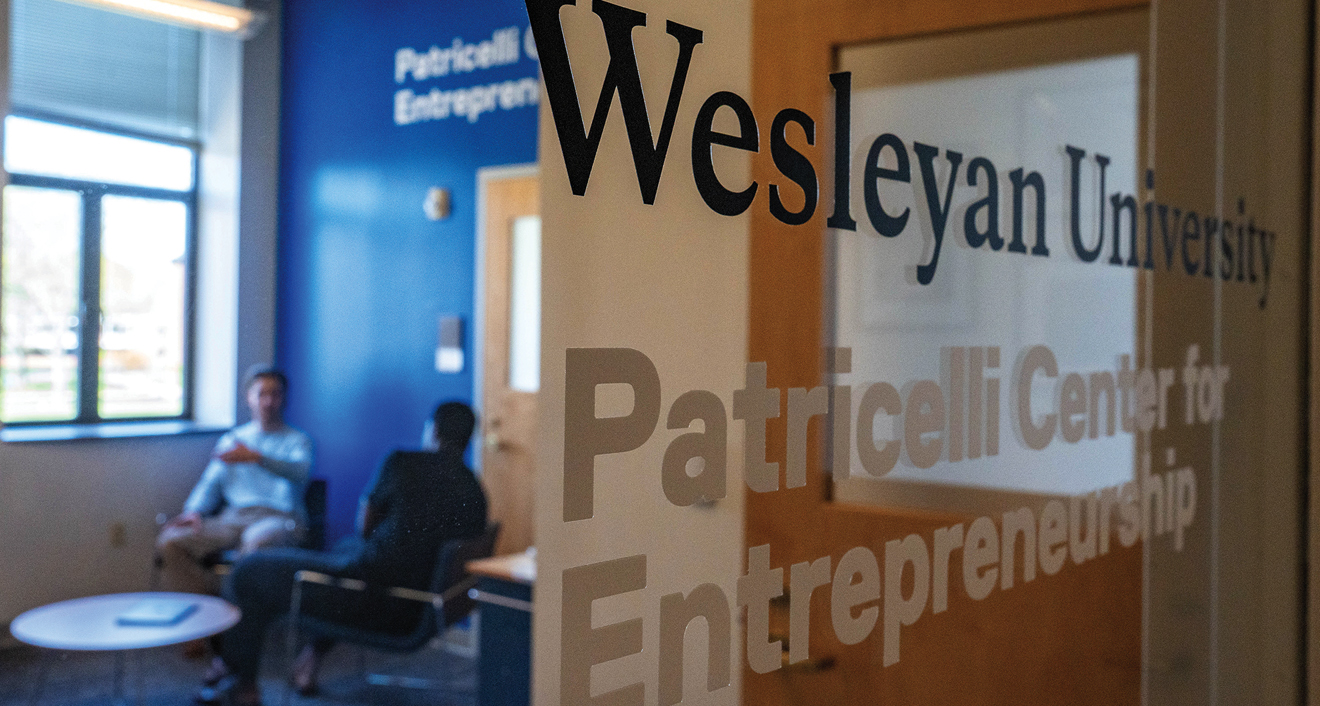
Fortunately for Dargel, Wesleyan’s Patricelli Center for Entrepreneurship (PCE) has a course expressly designed to teach entrepreneurs how to develop and deliver a perfect pitch. Student-created and student-taught, the Art of the Pitch draws upon the relevant experience of numerous guest speakers and conveys lessons on marketing strategies, fundraising approaches, legal issues, and other critical aspects of building businesses—but the pitch is front and center. Students go through three months of continuous iterating and multiple in-class practice sessions. Along with a public speaking workshop, students benefit from a dozen or more individual coaching sessions with industry professionals and other experts—including Kate Fuchs P’17, the former executive producer of ABC’s Shark Tank and spouse of Ken Fuchs ’83, P’17, the show’s longtime, Emmy-winning director.
Instead of a final exam, the course ends with a practical and consequential application of knowledge: a Shark Tank–style live pitching event where students have the chance to persuade real investors to part with thousands of dollars in cash on the spot.
A Course Founded by Entrepreneurs, Naturally
The course exists thanks to the entrepreneurial spirit of Ben Carbeau ’25 and Michael Astorino ’26. Carbeau cofounded Cape Tide Hard Tea, and while still a Wes undergraduate and captain of the football team began serving as its director of operations. Among other endeavors, Astorino is cofounder of a protein supplement company called Spacemilk. A member of the basketball team, he took the role of chief marketing officer of Spacemilk during his senior year, a position he still holds.
The duo created the Art of the Pitch as a credit-bearing student forum in 2025 after they’d both taken and TA’d the PCE’s startup incubator course taught by Rosemary Ostfeld ’10, MA ’12, assistant professor of the practice in environmental studies. In that course, aspiring entrepreneurs learn how to develop sustainable business models from their ideas. Envisioning a “part-two” to the incubator class, Carbeau and Astorino devised a curriculum that could be both the next logical step for student founders launching and scaling their businesses and a pitching bootcamp. The PCE piloted, funded, and expanded the course to be complementary to its other curricular and cocurricular offerings.
Pitching a Business, Not Just a Great Idea
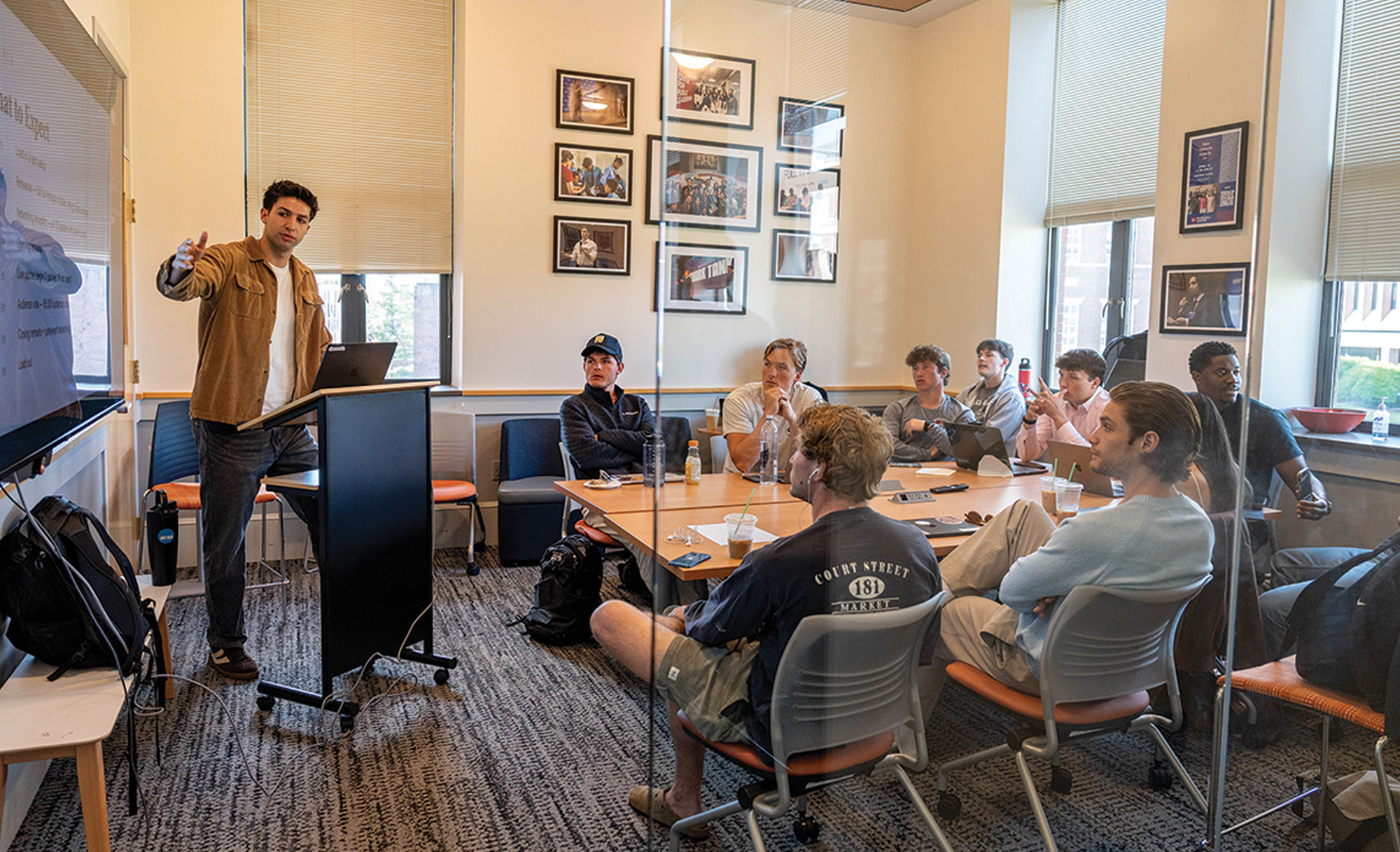
This past spring, Astorino co-led the Art of the Pitch with Palmer Zarzycki ’28, who will helm the course in 2027. On the first day of class in the PCE boardroom, they subjected students to an unannounced pre-test: Everyone had to give a cold, 90-second, no-prep pitch introducing their enterprise. The challenges were immediately apparent: How to generate interest in a sustainable junk removal business? How to explain the technical aspects of an app or a platform or an AI-powered approach to personalized skincare? As Astorino wrote later in his blog about the course, “Everyone learned something about how hard it is to take the thing you’ve been building and distill it into a clear, simple story.”
Sage Saada Saar ’26, who created an AI-assisted calendar-linking and scheduling app called Link’d, recalls, “The first time I pitched, I had just built a prototype. [I talked about] all the different things that you’d be able to do: You just press here, and then you do this, and then it shows you this . . . and that was the bulk of my pitch.”
What she wasn’t doing, she learned in the following weeks, was “getting to the pain.” That is, reminding her audience of the universally frustrating problem that was the impetus for the app in the first place: the prolonged logistical nightmare people endure when trying to find a meeting time that works for everyone.
Visiting Professor of Public Policy Marisa MacClary ’94, P’28, one of the PCE’s two entrepreneurs in residence, says a founder’s sheer enthusiasm about the solution they’ve developed can actually get in the way of a strong pitch. “A sustainable business starts with solving a real problem,” says MacClary. “Just because you love your solution doesn’t mean anyone’s going to pay for it.”
Investors listening to a pitch also want to hear evidence a business has a firm footing and competent leadership. Unlike some other student ventures, Saada Saar’s app had been beta tested among a small group of users to demonstrate its viability, but it didn’t have revenue or user numbers to demonstrate that it had “traction” as a business. Then, halfway through the semester, a class exercise required each student to pitch a classmate’s business as if it were their own. When Dargel pitched Link’d, he mentioned that it is both incorporated and has a patent. Those important milestones demonstrated a different kind of validation of the business. Saada Saar duly added them to her pitch. She characterizes the course-long evolution of her approach this way: “Overall, it’s going from thinking I’m pitching an idea and convincing people that this is cool to pitching an actual business, which includes a problem that’s being addressed and a team that’s behind it.”
Mentorship from Industry Experts
With support from the PCE and the Gordon Career Center, Astorino used his networking skills to make weekly guest speakers—many of them alumni—a key element of the course. These experts not only shared their entrepreneurial journeys and industry insights but provided individual mentoring.
One of the best tips Dargel received came in the latter part of the semester from guest speaker Yaniv Lusana, a principal at GS Futures. In a one-on-one session, Lusana pointed out that Dargel’s pitch represented ScapStick as a product for athletes, indicating to investors that the customer base would be limited. Plenty of people have shoulder pain just from sleeping the wrong way, Lusana noted, urging Dargel to consider framing his invention as a tool that can “solve shoulder pain” for everybody. Dargel immediately went to his laptop to lock it into his pitch.
Since the culminating event featured not only a two-minute pitch but also a 10-minute Q&A with the investors (similar to the format of ABC’s Shark Tank show), students needed to be ready to answer queries with the same kind of concise and compelling language that invigorated their pitches. Executive director for startups at JP Morgan Jesse Bardo ’07 was one of the guest lecturers who, after his class presentation, helped prepare students for the kinds of questions they could expect to hear on stage: How do you know it works? Who is the customer for this? How have you marketed it thus far?
Astorino notes, “We asked each other just about every question you could think of in preparation. There was nothing that [founders] hadn’t been asked several times before the event.”
Showtime
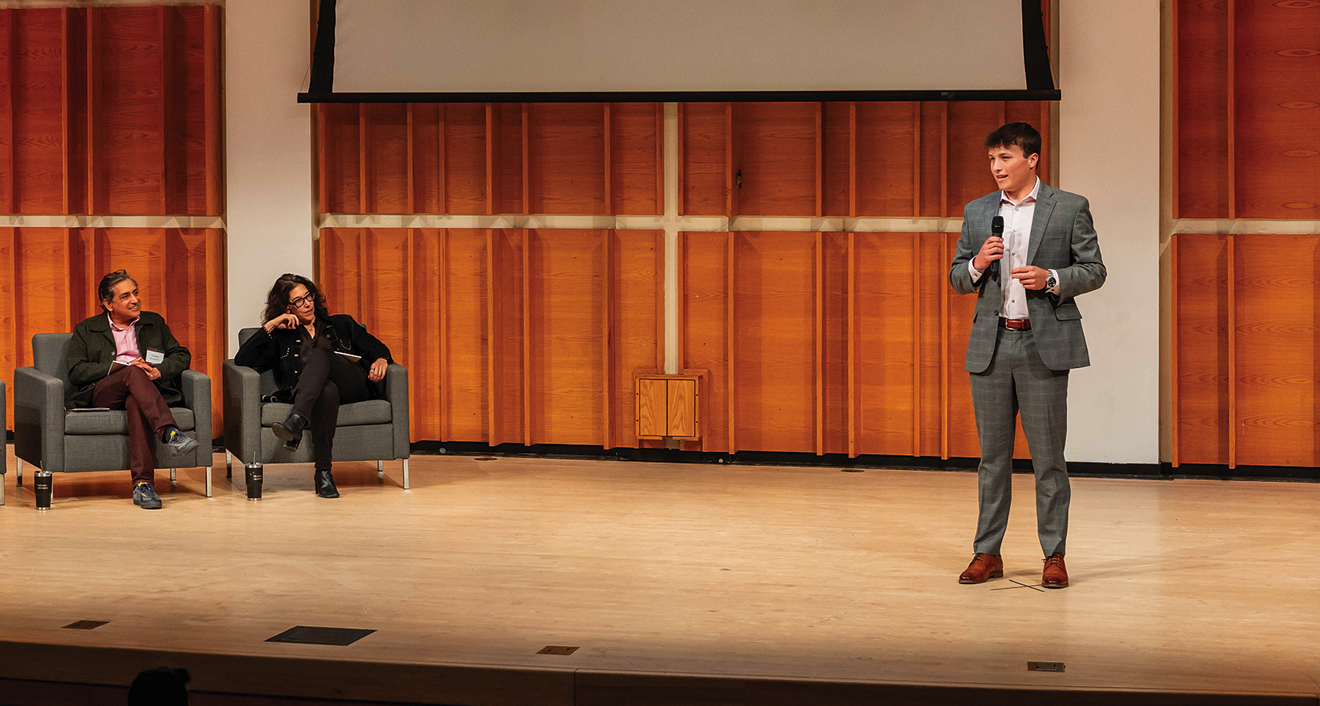
On May 4, seven student entrepreneurs pitched their businesses to five alumni investors before an enthusiastic livestream and in-person audience at the 449-seat Merkin Hall on Manhattan’s Upper West Side. (Three additional founders did not pitch to the investors but competed for the audience choice award.) In all, the founders garnered $45,000 in cash that would help with trademarking, patenting, or other needs. Arguably even more valuable were investor commitments to help with business development and to introduce student founders to the panel’s extensive networks and relevant business markets.
Student Founders
-
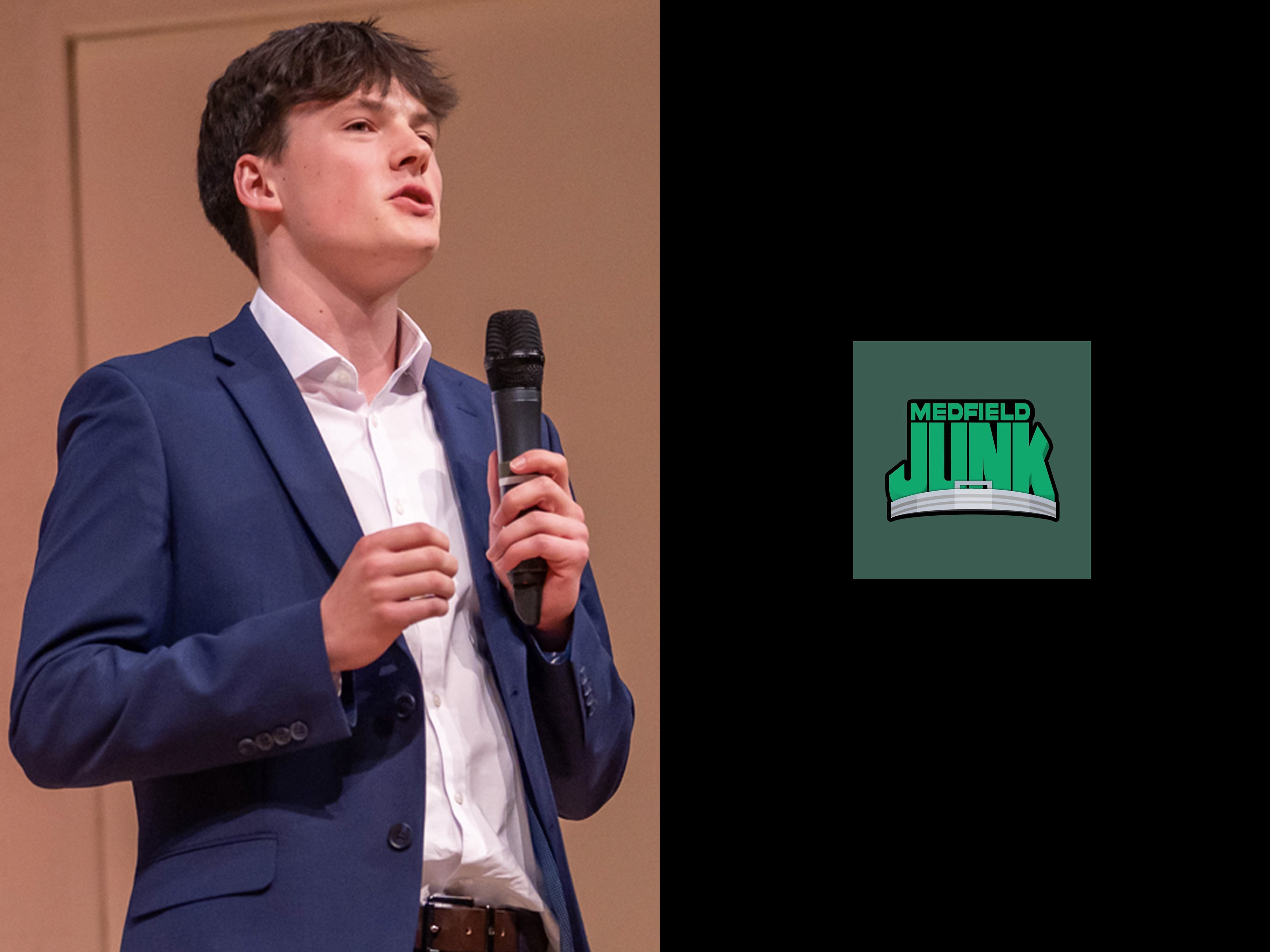
Medfield Junk
Rowan Tracey ’29 pitched Medfield Junk, a student-operated, sustainable junk removal business. In addition to support from alumni investors in the form of business connections, Tracey received the Audience Choice Award of $5,000.
-
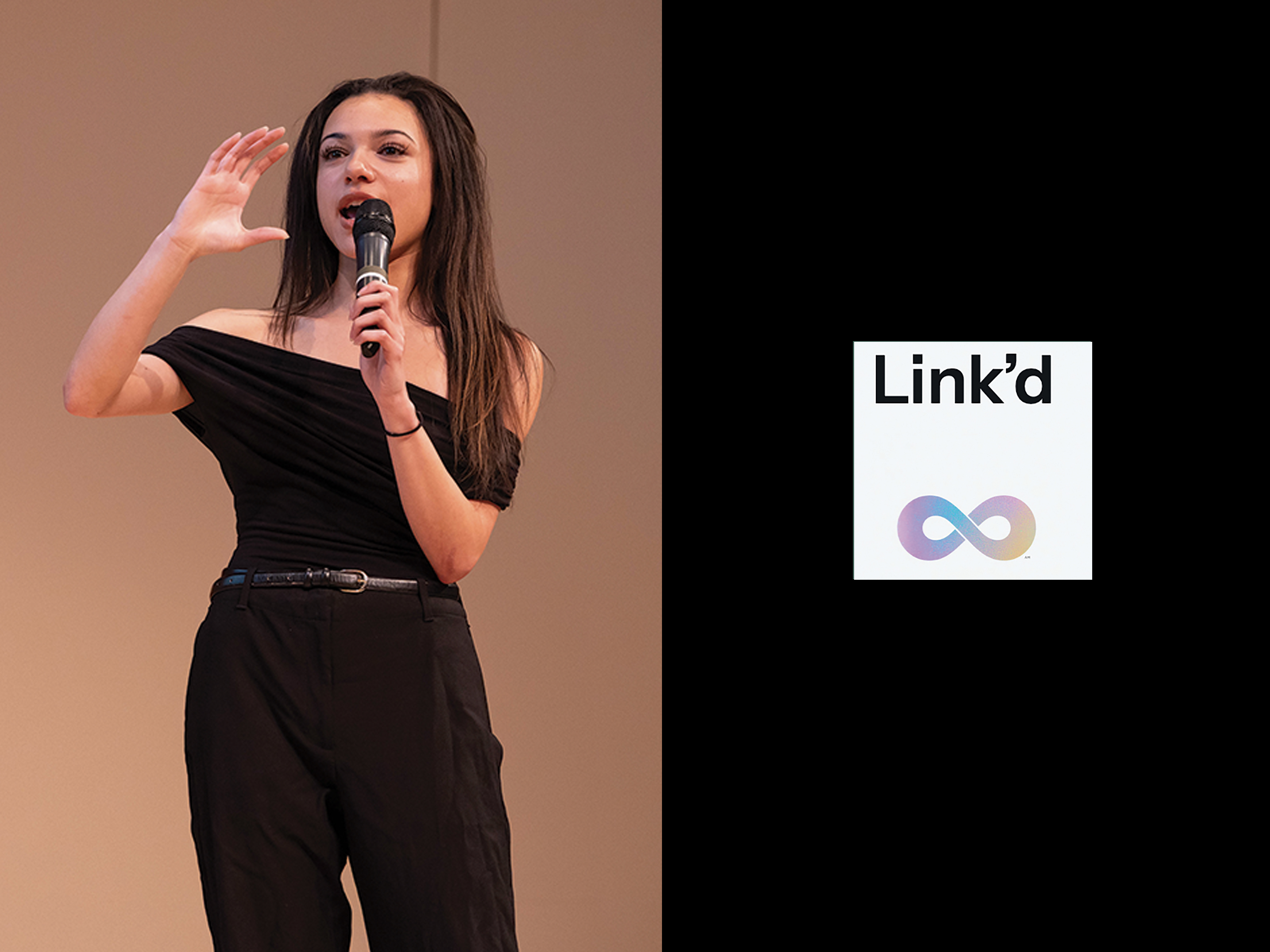
Link'd
Sage Saada Saar ’26 pitched Link'd, her calendar-linking and scheduling app. The alumni panel of investors committed to connect her to the technical and business mentorship she was seeking.
-
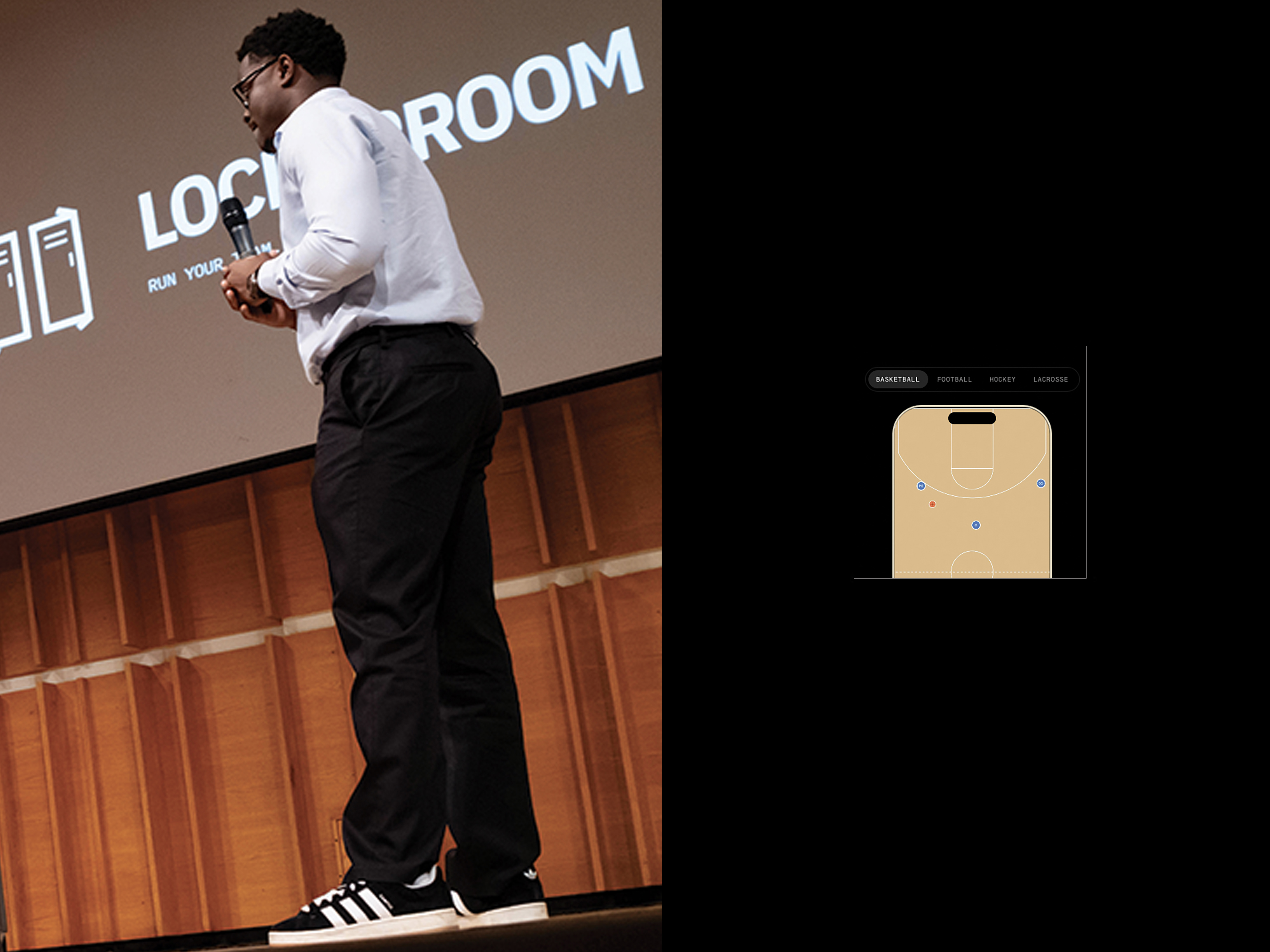
LockerRoom
Chukwudi Udechukwu ’27 pitched LockerRoom, a unified platform for team communications, animated playbooks, and AI-driven coaching and program management. Alumni investors made a $5,000 commitment and offered to connect him to a patent attorney.
-
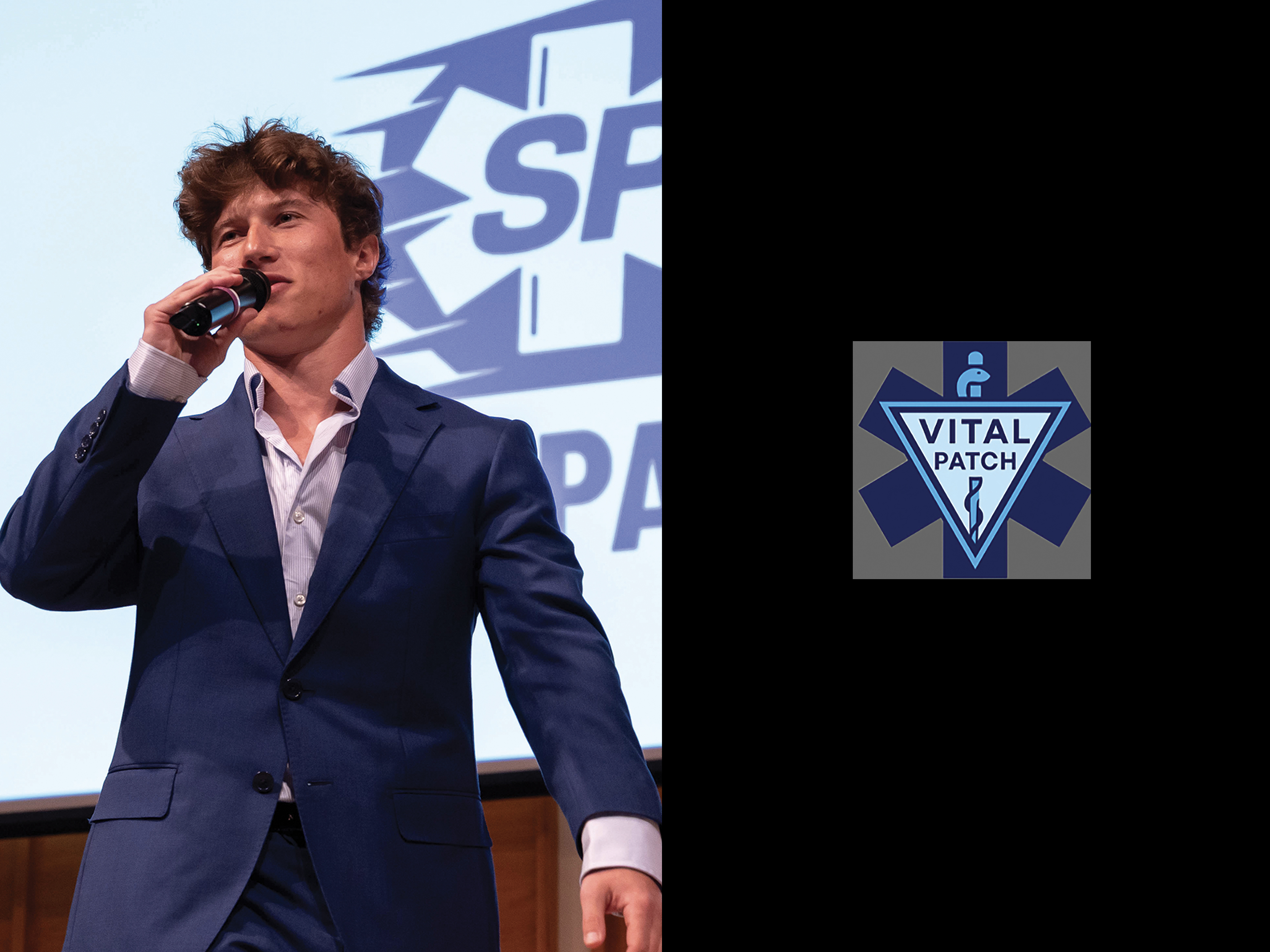
VitalPatch
Volunteer EMT Cal MacClarey ’28 founded VitalPatch, an adhesive patch that continuously monitors patient vital signs and transmits them to EMTs via Bluetooth. He pitched before the audience but not investors.
-
Milieu
Adam Schatz ’27 secured $15,000 in alumni investment capital for Milieu, a skin-care brand that provides an at-home skin microbiome test paired with AI analysis to build custom skincare formulations.
-
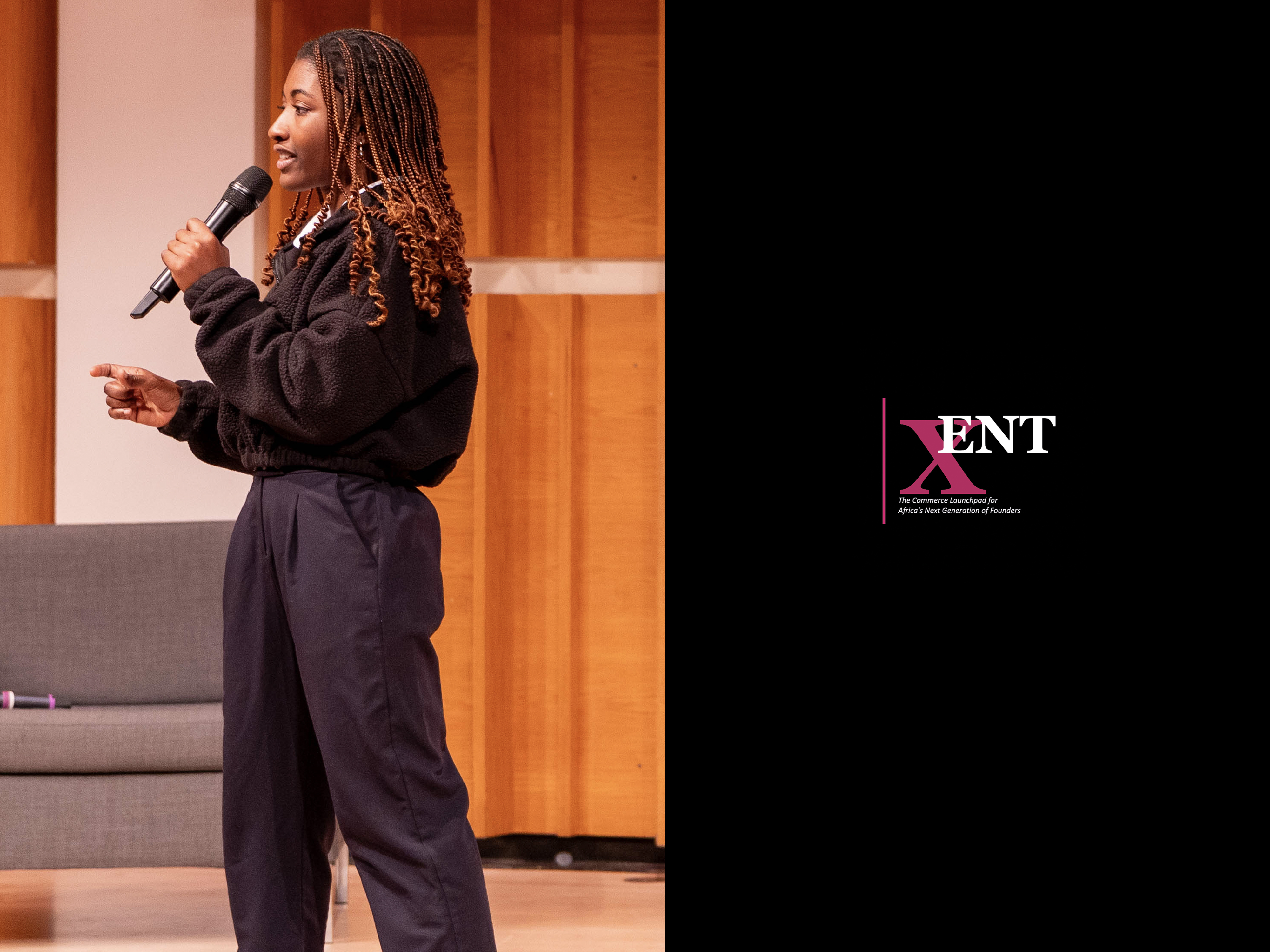
Xent
Lois Amponsah ’27 created Xent, an e-commerce marketplace built for student entrepreneurs at West African universities to launch real storefronts on campus. She pitched to the audience but not investors.
-
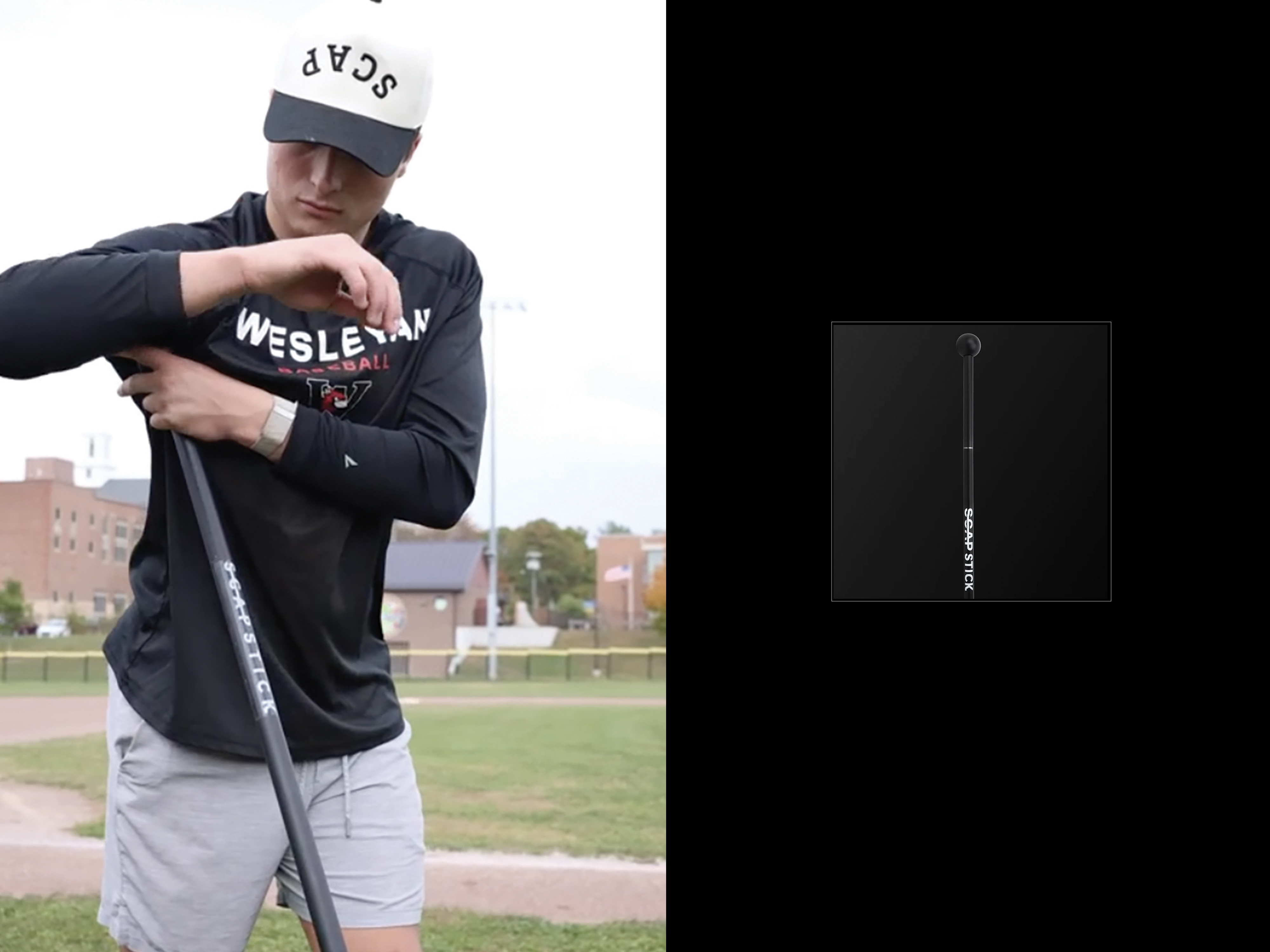
ScapStick
Nick Dargel ’28 invented the ScapStick to release tightness in the subscapularis muscle, a common cause of shoulder pain and injury. Alumni investors committed $10,000 in capital and offered valuable business connections.
-
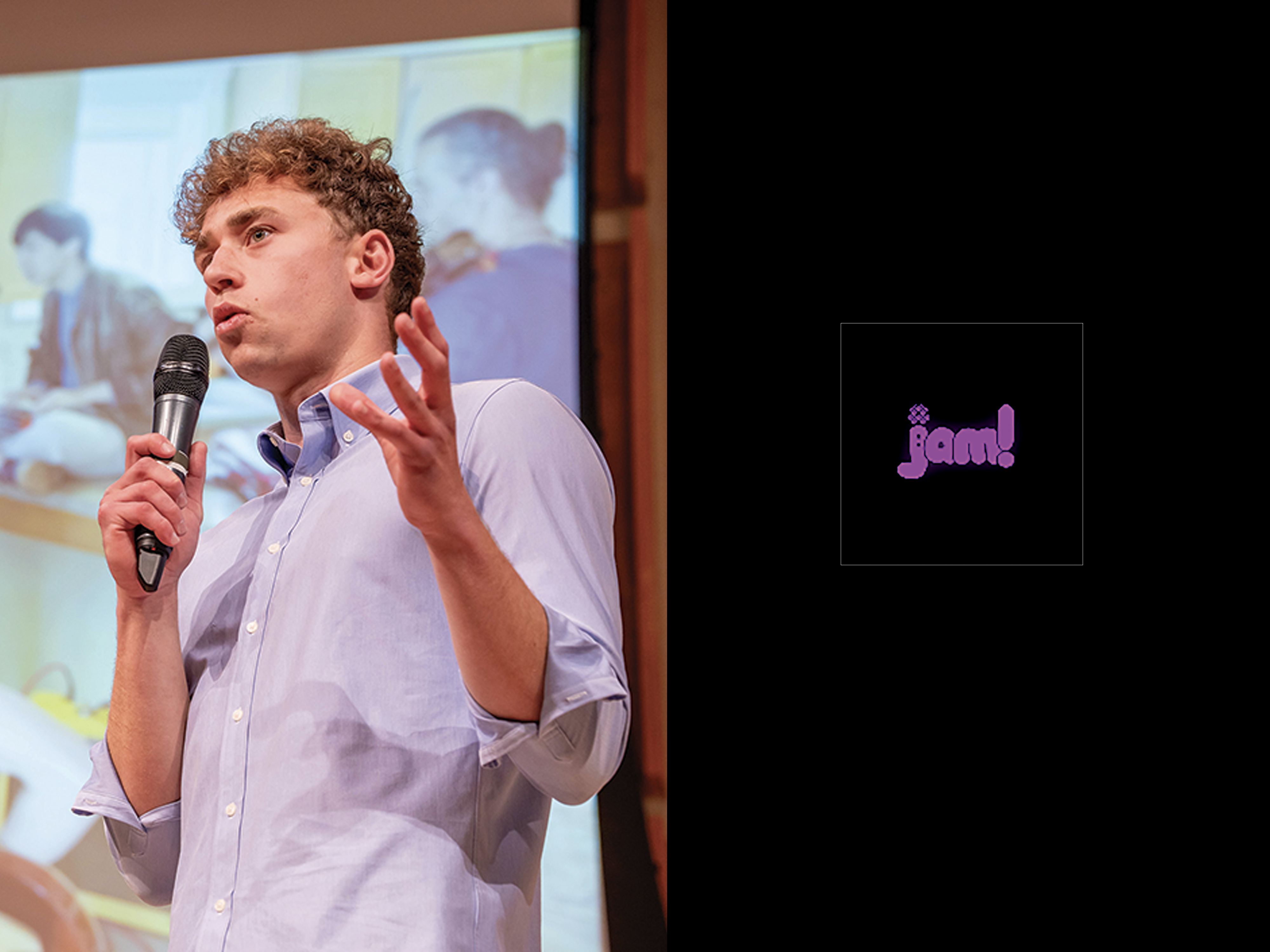
Jam Scsh
Sam Pohlman ’26 secured business connections and $5,000 in investment capital for Jam Scsh, a music-first social platform that lets artists monetize live performances and connects artists and fans.
-
Planisphere
Liam Farrell ’26 founded Planisphere, a platform that uses AI to automate inbox triage for real estate private equity firms, enabling them to find the deals they're looking for without reading thousands of emails. He did not pitch at the event.
-
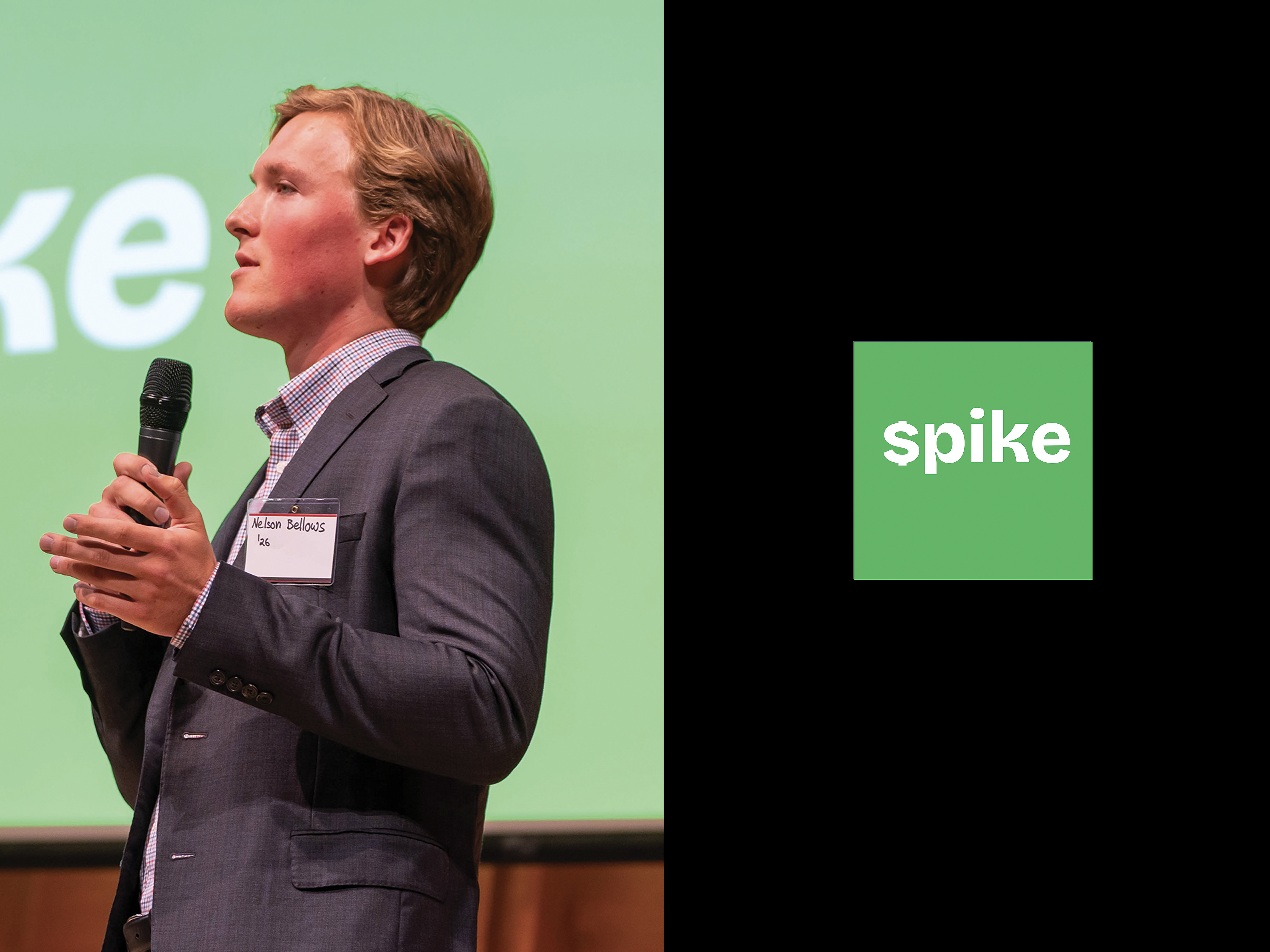
Spike
Nelson Bellows ’26 received $5,000 in investment capital for Spike, a prediction market for short-form content where users trade on whether TikTok videos will go viral.


“Honestly, I was blown away by the students,” Susan Paley ’89 said after the event. A partner at Conduit Venture Labs, she served as a judge alongside fellow “sharks” Eric Jasinski ’17, researcher at Positive Sum; Peter Frank ’12, cofounder and CEO of DEV; Raquel Graham ’90, founder and CEO of Roq Innovation; and Pradeep Khurana ’91, founder and managing director of ContinuServe.
Paley says, “I’ve sat through countless pitches, and I could not believe the level of maturity. They nailed the narratives around their companies.”
She was equally struck by how far along the students’ ventures were. Says Paley, “I expected to hear early-stage ideas from a class exercise. Instead, the students presented real companies. ”
Dargel’s pitch was a masterclass on deftly transitioning from one part of the story to another: He started with his personal experiences with shoulder pain and the lack of effective treatment options. His assistant, baseball teammate Ben Bryant ’29 in uniform, provided theatrics, flinging useless foam rollers, massage guns, and even a lacrosse ball aside before demonstrating Dargel’s invention, a five-foot-long aluminum staff with a tennis-ball-sized wooden sphere on the end. Dargel’s language at the crux of the pitch was clear:
“The ScapStick uses leverage and body positioning to unlock deep scapular tissue that every other tool misses. It’s becoming what the back roller is for your spine, but for your shoulder—a daily, go-to, reliable tool that actually solves the root of shoulder pain, not just the symptoms people feel.”
Near the end, he provided good metrics, including the fact that ScapStick is being used by more than 50 D-I college baseball and Major League Baseball programs.
Investors Eric Jasinski and Peter Frank each committed $5,000 to the venture. Paley offered to introduce the ScapStick to Exos, a global human performance company affiliated with over 2,000 coaches and practitioners, and where she is a board member.
Taking the stage after Dargel, Saada Saar opened her pitch with a relatable problem.
“Sharks, we’ve all been there before: struggling to schedule a dinner across five friends or to find the next time a team can hop on a call at the end of a meeting. The way we meet up is broken. We verbally rattle off times back and forth until one happens to land or send availability windows over lengthy email chains.”
After decrying the fact other apps designed to solve the problem require manual updating, she offered her solution:
“With AI at our fingertips why can’t we make our lives simpler? It’s time for a solution that meets us where we’re at. That’s why I built Link’d, the first fully autonomous scheduling platform that finds the best time for everyone.”
“I’m in,” declared Paley at the conclusion of the pitch, committing to connect Saada Saar with technical mentorship she’ll need to take her product to market.
Every student who pitched walked off stage with a meaningful offer and a way to move their business forward. Later, Astorino—the proud teacher—sent each student a video of their original pre-test pitch to remind them of how far they’d come. He says, “It’s eye-opening, the difference between day one and what 12 weeks can do.”
Lead image: Nick Dargel ’28 pitches his business to alumni investors at a live event at the Kaufman Auditorium in New York City. Dargel was one of seven student entrepreneurs seeking funding, mentorship, networking connections, and other assistance in launching or scaling up their startups. The event was sponsored by the Patricelli Center for Entrepreneurship and the informal Digital Wes community. All photos by Joel Cintron.
Links to business websites: Cape Tide Hard Tea, Jam Scsh, LockerRoom, Medfield Junk, Milieu, Planisphere, ScapStick, Spacemilk, Spike, Xent