Track Star: The Music Is the Story
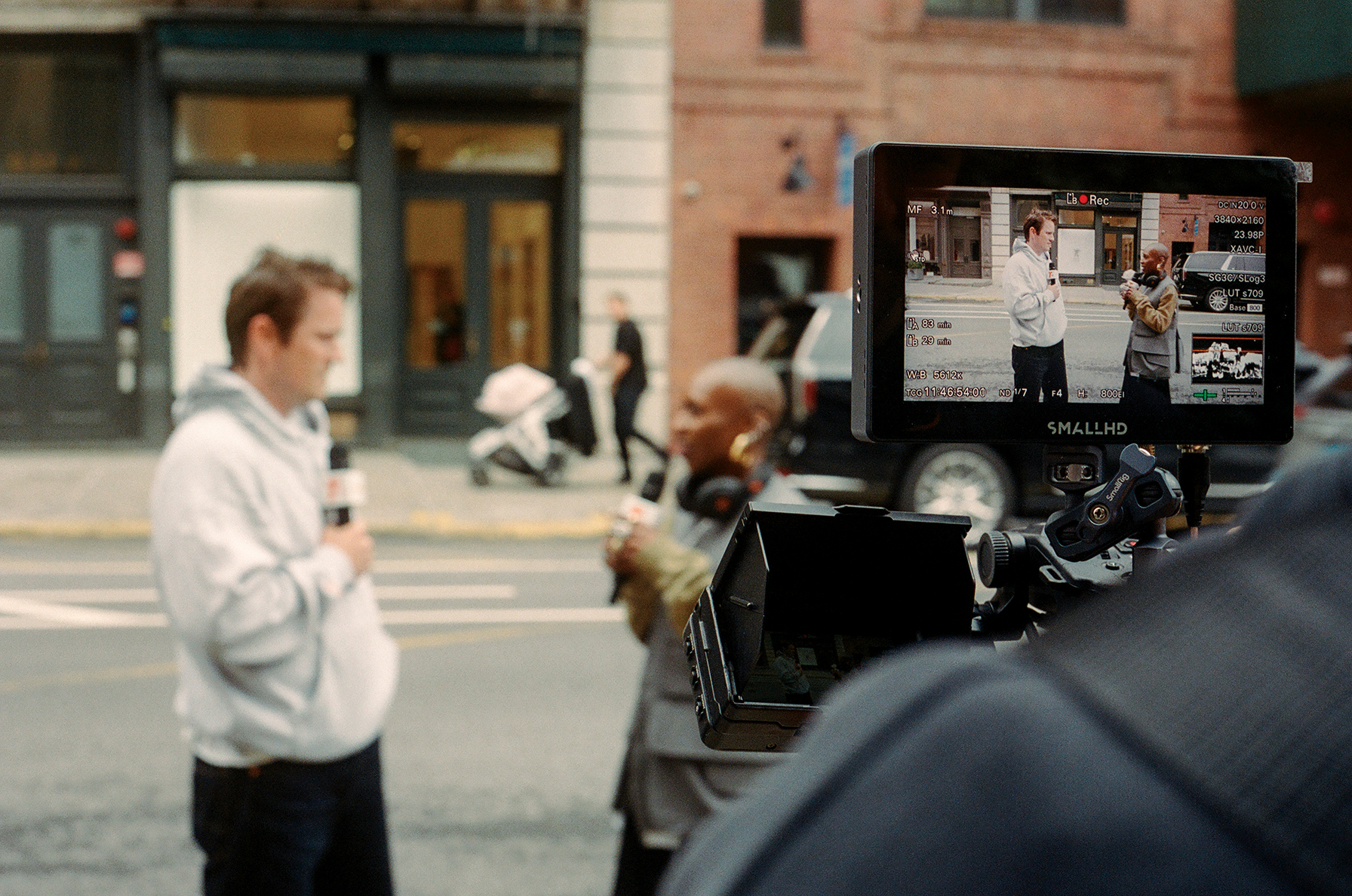
When Jason Momoa and Jack Coyne ’13 first meet on a New York City sidewalk, Momoa is the same gruff, imposing action hero he plays on the big screen. Then Jack hands him a pair of headphones and cues up music—Black Sabbath, Alice in Chains—and Momoa’s voice softens. Suddenly, he’s a goofy, metal-loving kid tripping down memory lane. He talks about the single mother who raised him on Motown records. He cracks jokes. He pantomimes a bass guitar solo while Jack headbangs at his side. Momoa says, “This is the best interview ever.”
On paper, the viral video show Track Star is simple enough: The Coyne brothers—Jack in front of the lens, Kieran ’16 behind it—get pedestrians on the sidewalk to listen to a playlist and earn money for each song they identify correctly. In practice, however, the show plays more like StoryCorps with a soundtrack. The combination of music and Jack’s disarming interview style leads guests into sharing relatable moments, nearly forgotten memories, and slices of their lives, whether that guest is Momoa, former Vice President Kamala Harris, or Ray, a local firefighter.
Since debuting in 2023, Track Star has gained about 1.2 million followers on Instagram and another 600,000 on TikTok, providing a short-form runway to a wider range of content—mini-documentaries, deep-dive podcasts, intimate live performances—created by Public Opinion, the Coynes’ production company. With a recent seven-figure investment from the former CEO of Rolling Stone magazine, the brothers are working to build Public Opinion into a post-cable MTV-style production powerhouse. Through it all, they’re doing something radical in the age of online rage bait: feeding the algorithm something as uplifting as it is entertaining.
“It’s about people, it’s about humanity, it’s about interacting with a stranger in a positive way,” Jack says. “Music is the vehicle that enables that.”
Big Picture, Small Screens
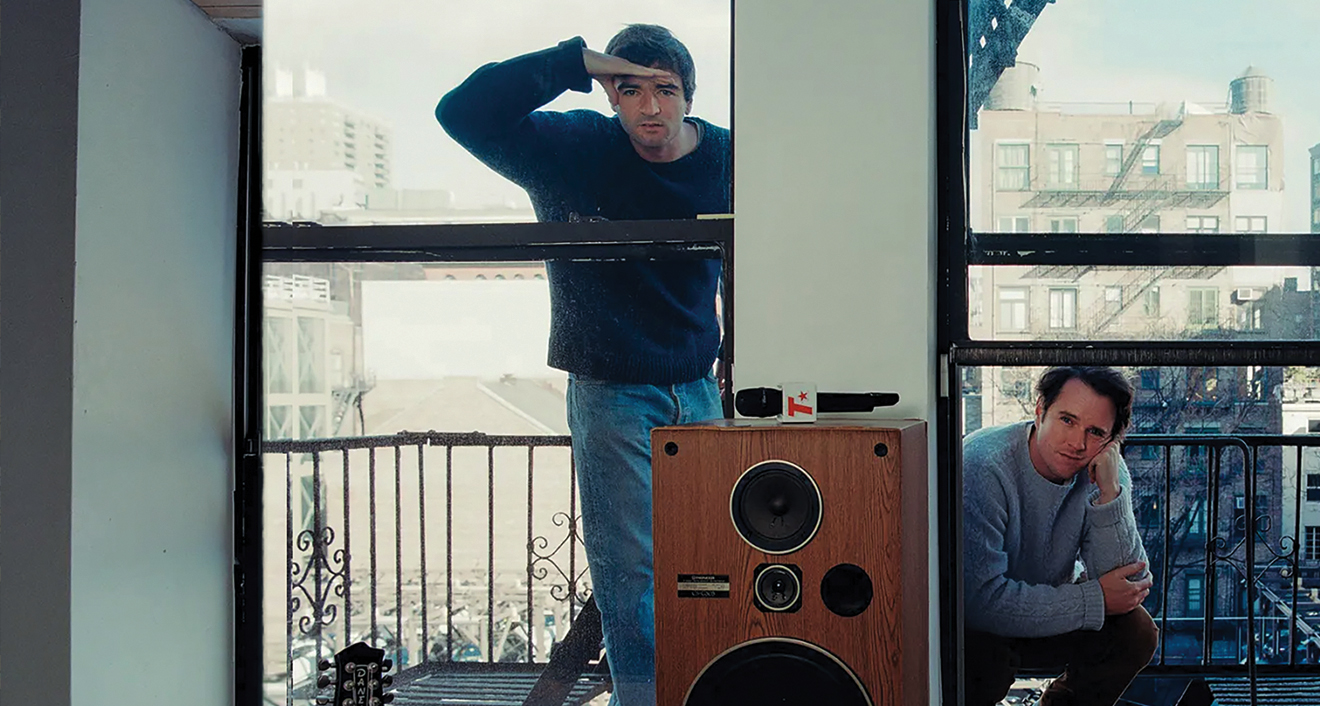
The Coynes grew up surrounded by music, from the Grateful Dead records their father played in their East Village home, to the touring choir that Kieran performed with in front of the Pope, to the Virgin Megastore in Union Square that they passed on their way to school. (The “visual inspiration” for Track Star, Jack says, comes from the store’s iconic listening stations that played new CD releases through ear-hugging headsets.) But an emerging love of film brought each of them to Wesleyan, gaining a big-picture understanding of how films work with their audiences. His first year, Jack discovered the work of Casey Neistat, a digital filmmaker with an HBO series and a pioneering YouTube channel. It made him see the potential in small screens, and after securing an internship with Casey and his brother Van, Jack learned the technical side of digital filmmaking between semesters.
“I had that balance: I’d be working for these guys making YouTube videos, then during the rest of the year I’d be studying classic movies in school,” Jack says, who double-majored in economics. After graduation, he became the first employee of Beme, the Neistats’ social media startup, which CNN acquired in 2016. Meanwhile, Kieran got his start making digital media for New York–based companies like Thrillist instead of heading west. “[Going to Hollywood] was a way to get into the movie business, but not the best way to immediately start making videos,” Kieran says.
CNN’s sudden shuttering of Beme in 2018 ultimately led the Coyne brothers to work together in earnest, beginning with a travel show where Jack was an assistant director and Kieran was an editor. After their father’s passing and with the pandemic causing a scarcity of creative work, the Coynes found themselves living at home and populating Jack’s channel with new clips, like a quirky explainer video illustrating the economics of the industrial food system through a review of the McDonald’s Filet-O-Fish sandwich. As the world opened back up, they took on commercial projects for clients like GoFundMe, meeting future business partner Henry Kornaros along the way.
“We want to create an infrastructure and a business where lots of creative voices can come and fit into what we’re doing and help us expand this sort of curiosity-led storytelling.”
At the same time, they saw new opportunities in emerging short-form video platforms—Instagram Reels, YouTube Shorts, TikTok—flooded with man-on-the-street interviews with obnoxious gimmicks. “A lot of the videos we were seeing were somebody going up to someone with a camera in their face, saying ‘How much money do you make?’” Jack says. Instead, he says, they wanted to serve the equivalent of nutritious food (Filet-O-Fish notwithstanding) to followers who were sick of the empty calories in their social media feeds. “I’m taking your time when you’re watching my thing, so I want to give you back something of value.”
“When You Hear a Song, It Triggers an Emotion”
In 2022, the Coynes and Kornaros launched the web series Public Opinion NYC. They cajoled passersby into answering Big Apple–centered trivia questions—What’s the most populous borough? Who designed Central Park?—and offered $5 for the first correct answer. Players could go double or nothing in subsequent rounds. “We had to create a honey trap,” Jack says. The show went viral, but finding contestants who knew the city well enough to sustain the format grew increasingly difficult. So, they pivoted to music.
“When you hear a song, it triggers an emotion, and it transports you somewhere,” Jack says, “and I knew that would be a powerful tool when we created the show.”
They started by approaching random people and sussing out their favorite artists and genres on the spot. Double-or-nothing guesses remained part of the format—most winners get a few hundred bucks, while one came away with just over $20,000—but the playlist’s real purpose is to get interviewees to open up. “I’m really not trying to stump people; I’m trying to get them to talk about stuff that makes them excited,” Jack says.
The headlining attraction is the conversations themselves. Before long, celebrities like pop singer Olivia Rodrigo sought out the show, trading canned media circuit talking points for looser conversations about the music that they love. When Bob Dylan’s “I Want You” hits Ethan Hawke’s ears, he plucks an air guitar. Hearing Salt-N-Pepa makes Jennifer Lopez break into dance on the sidewalk. Jack Johnson recalls draining his Walkman’s batteries listening to Jimi Hendrix after Coyne cues up the guitar legend. Backstage with Track Star at the 2024 Democratic National Convention, then Vice President Kamala Harris correctly identifies Miles Davis and Too $hort before ending the interview by telling Jack, “I love what you do.”
“The biggest of all was when we got invited to Sesame Street,” says Jack. It turns out Elmo listens to Stevie Wonder and Billie Eilish.
-
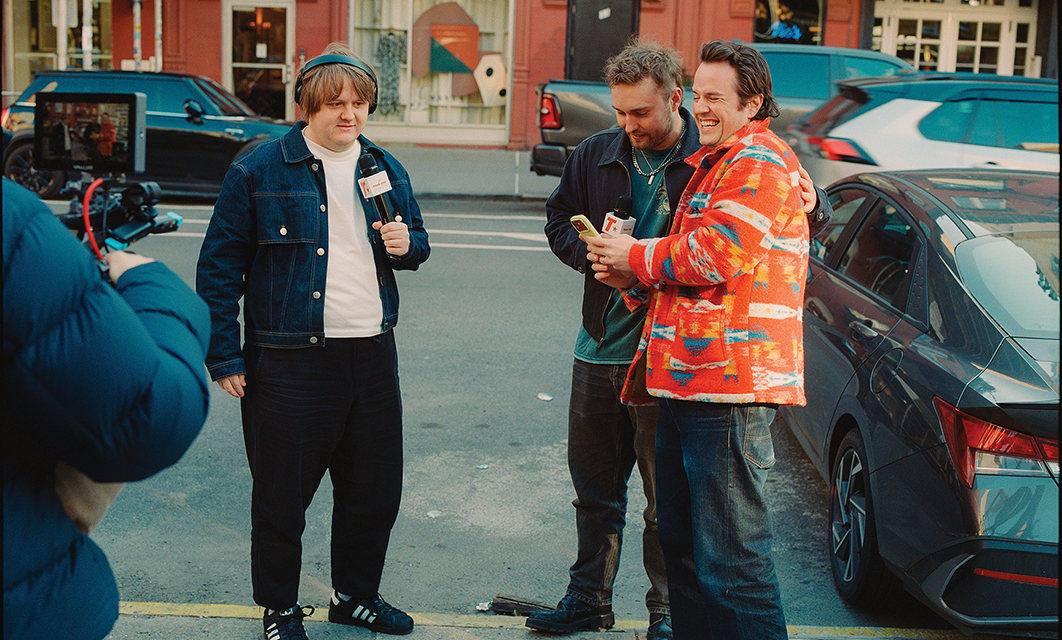
Jack Coyne (far right) with Scottish singer-songwriter Lewis Capaldi and British rock singer Sam Fender.
-
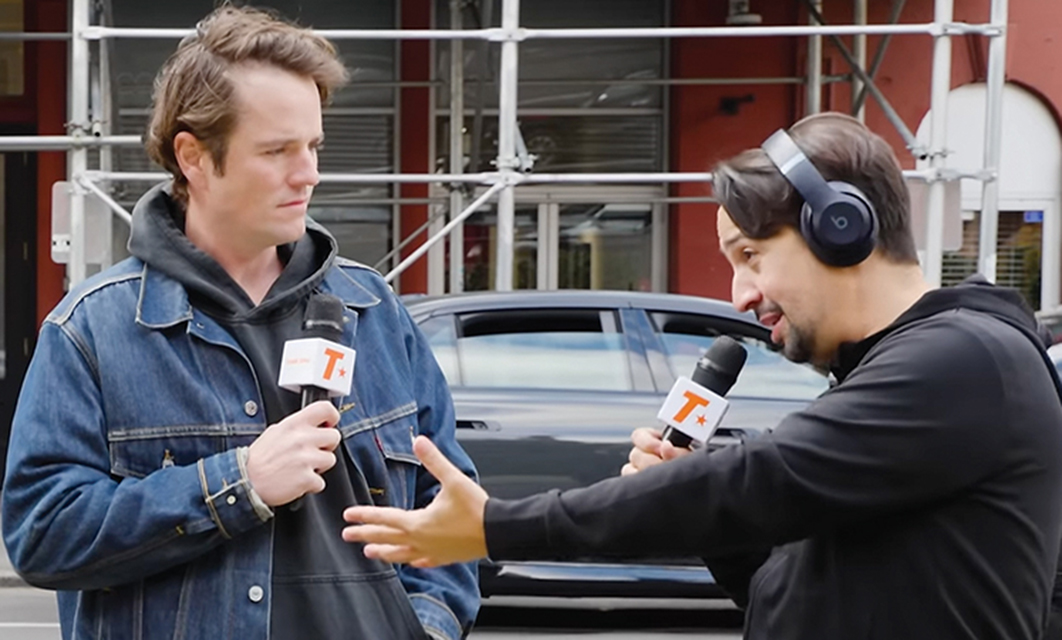
Musician, performer, and librettist Lin-Manuel Miranda ’02, Hon. ’15.
-
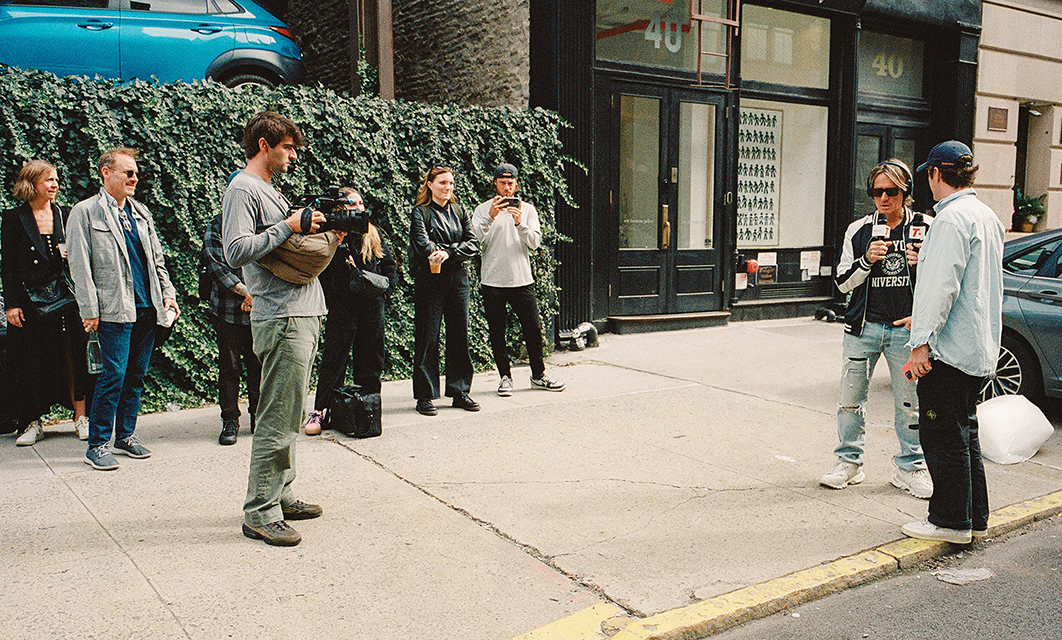
Kieran (with camera) filming Jack interviewing country music star Keith Urban.
Scaling Up
As Track Star became a destination for A-listers, its revenues doubled year over year. Advertising dollars from social platforms gave way to lucrative partnerships with brands like Rivian, Jack Daniel’s, and Beats by Dre; Public Opinion’s in-house agency, meanwhile, produced work for clients like Nike, Gucci, and Microsoft. The founders hired more creatives to keep up with the growth and recently rounded out an org chart with key hires in revenue and operations. After building up a cash cushion, the Coynes and Kornaros—all equal partners—agreed to keep their salaries modest and channel the rest of the profits back into the business with ambitions beyond short-form video. “We were like, let’s just invest back into the space and try to make it a place where, no matter what direction you point the camera, it’s going to look good,” Jack says.
Today, Public Opinion’s fifth-floor office in Lower Manhattan’s NoHo neighborhood—once a dusty white box filled with furniture from their parents’ basements—has been built into 2,100 square feet of partitioned offices and production spaces for a dozen employees and counting. Its studios host a series of Tiny Desk–style performances from bands like The Black Keys, and longform podcast interviews delving into subjects like Chicago blues label Chess Records, the legacy of Lower East Side nightclub CBGB, and the history of pop punk. Meanwhile, Jack’s research into New York City trivia formed the groundwork for mini-documentaries exploring offbeat aspects of the city, from the obstacles facing local tennis players to how the city organizes traffic infrastructure across the five boroughs.
“There’s so much about how our world works [where] I find myself [thinking], I don’t really know the answer to this question,” Jack says. “We can lead with really simple questions: How does this basic thing work? Who are the people that make this thing work? And when you know, it gives you a foundation for understanding everything else.”
Beyond Viral
Public Opinion’s range of content—breezy celebrity-centered interviews juxtaposed with deeper dives into music and culture—recalls the heyday of music magazines. Recent events make that comparison even more fitting. A holding company helmed by former Rolling Stone CEO Gus Wenner announced a seven-figure investment in the company in early 2026, a deal that installed Wenner as Public Opinion’s executive chairman and signaled the next chapter of its growth.
But Public Opinion’s leaders invoke a different legacy brand as a guidepost for its expansion: MTV—the music television channel that revolutionized the art form in the 1980s—calibrated to a world that’s moved beyond the monoculture of cable. “I think there’s an interest in finding this central voice that people could trust and listen to,” says Jack. “We want to create an infrastructure and a business where lots of creative voices can come and fit into what we’re doing and help us expand this sort of curiosity-led storytelling.” So far that’s meant developing programming that leans further into journalistic terrain, recruiting more on-camera personalities, and plotting a steadier schedule of mini-documentary releases. “The goal is to continue to have the same educational, entertaining, approachable vibe, but to make use of all the talent out there to tell more and more stories from different perspectives,” Kieran says.
That manner of thinking departs from the one that’s guided the internet experience for a generation: Dupe audiences with clickbait, stir up big feelings, and keep them arguing in the comments. Instead, the Coynes want to give us content we actually want to see when we unlock our smartphones.
“People want to learn, people want to be entertained, and people want to see something positive,” Jack says. “It’s very hard to look away from something that’s abrasive and negative, but I think what people genuinely want is to walk down the street and smile at other people.” Sometimes all it takes is someone to press play.
Familiar Songs, Memorable Reactions
“My room was covered, every square inch, with Elton John posters and memorabilia . . . I kind of taught myself how to play by ear on the accordion by playing along with my Elton John records.”—“Weird Al” Yankovic (musician) on “Bennie and the Jets” by Elton John
“I think, honestly, if I didn’t see two people I saw every day go on to do music for a living, I probably didn’t think I could do it . . . I took what they did with irony and psych rock, and I was like, ‘What if I do that with hip-hop?’”—Heems a.k.a. Himanshu Suri ’07 (musician) on “Kids” by MGMT
“I have all my mixtapes still. I never lost any of them.”—Drew Barrymore (actor) on “Boys Don’t Cry” by The Cure
“His lyrics [are], to me, on the level of Leonard Cohen.”—RZA (musician, Wu-Tang Clan) on “Only the Good Die Young” by Billy Joel
“I was doing a profile of Paul McCartney, and I asked the asinine question: who’s better, the Stones or the Beatles? . . . The great idiot question of all time.”—David Remnick (editor, The New Yorker) on “Little Red Rooster” by The Rolling Stones