Reconnecting and Reflecting: Homecoming and Family Weekend 2026
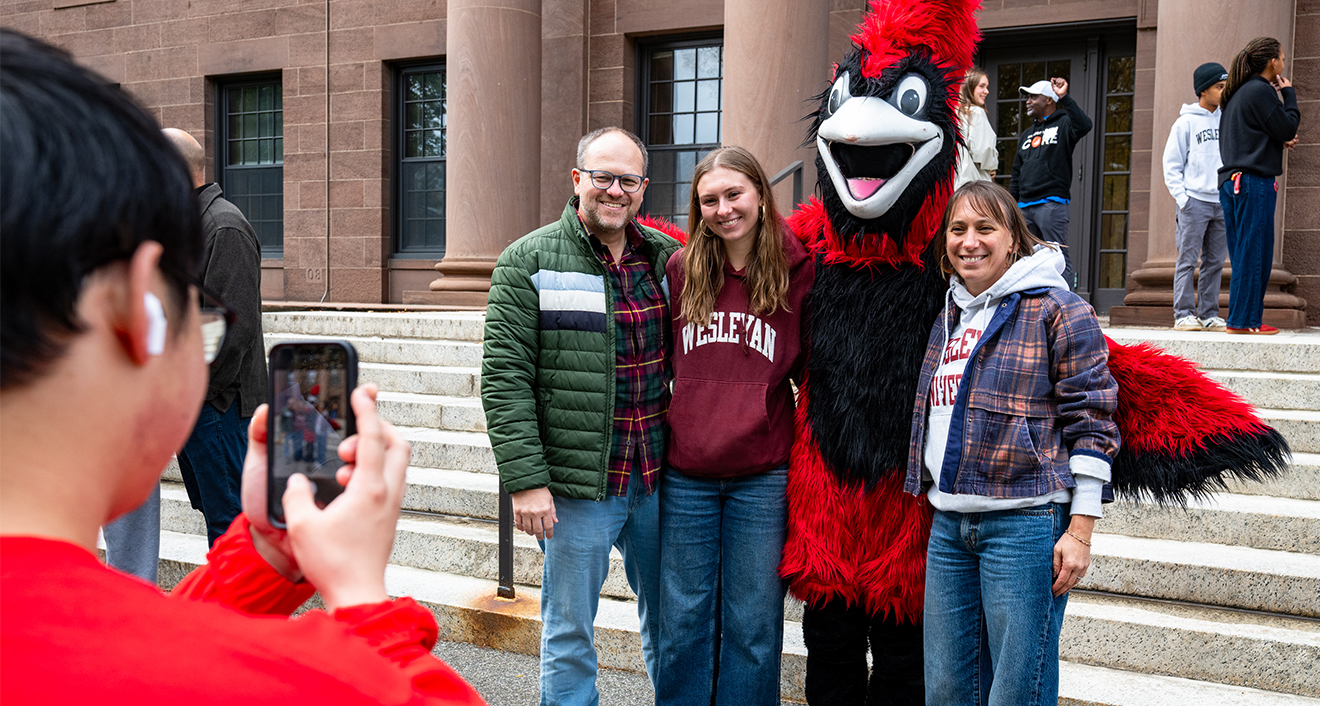
A little rain did not deter the more than 2,000 alumni, family members, and guests who converged on Wesleyan’s campus from Oct. 16 to 18 for Homecoming and Family Weekend 2026. For three days, the campus community enjoyed a range of festivities—from athletics, exhibits, lectures, and topical panel discussions to informal gatherings—to reminisce and reconnect.
Shirley Emehelu P’29 came to Middletown to visit her son, Nnamdi Emehelu ’29. She said he has found a supportive community on the soccer team, where he plays defense, and has grown to be more confident and mature since coming to Wesleyan. Off the field, he studies economics and has taken music and dance courses, she said. He is taking piano lessons and often spends time playing in practice rooms.
“I think [Wesleyan] is a place that fosters curiosity across all fields, even beyond your major, which I think is wonderful,” Emehelu said. “I think that's reflected in the parent community, too.”
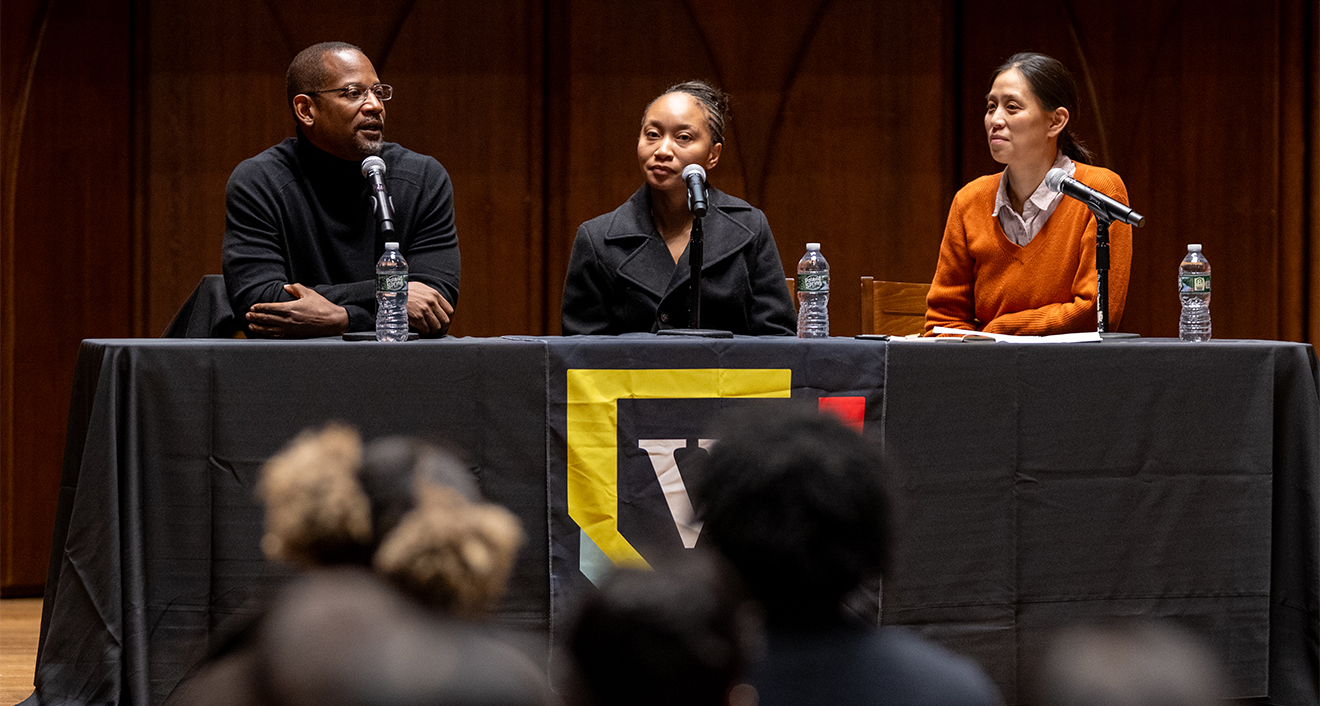
 On Friday afternoon, Wesleyan’s Center for Prison Education (CPE) offered a WESeminars, "Dialogue Across Difference." CPE faculty advisor Anthony Hatch, also director of the Center for Humanities, moderated a conversation about the transformative, collective effort of shared intellectual inquiry and the meaningful relationships formed for students through co-learning with peers in prison. "If imprisonment is an act of dehumanization, the liberal arts education is an effort to rehumanize," Hatch said.
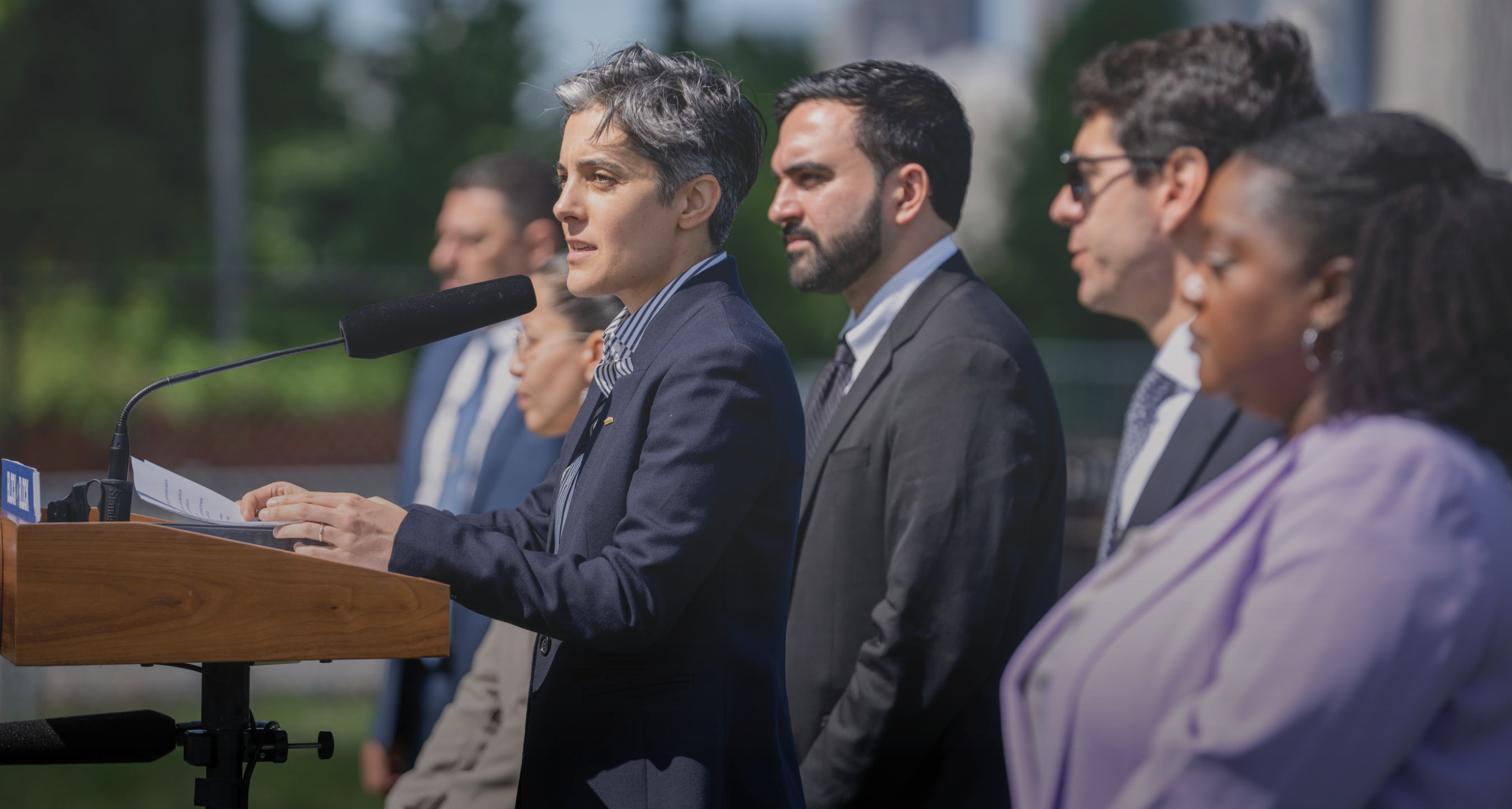
One highlight of every homecoming is the annual address that President Michael S. Roth ’78 offers for parents and families. In a packed Crowell Concert Hall on Friday, he spoke about the “beautiful, interesting, nuanced” questions that students pose when they meet him during office hours, and how that continues to inspire him after decades of teaching.
Noting that 2026 marks the 250th anniversary of the signing of the Declaration of Independence, Roth recounted how the University distributed a copy of the declaration to new students at the start of the year. The themes of democracy, free speech, and free and fair elections are critical to education, he said, particularly to combat cynicism.
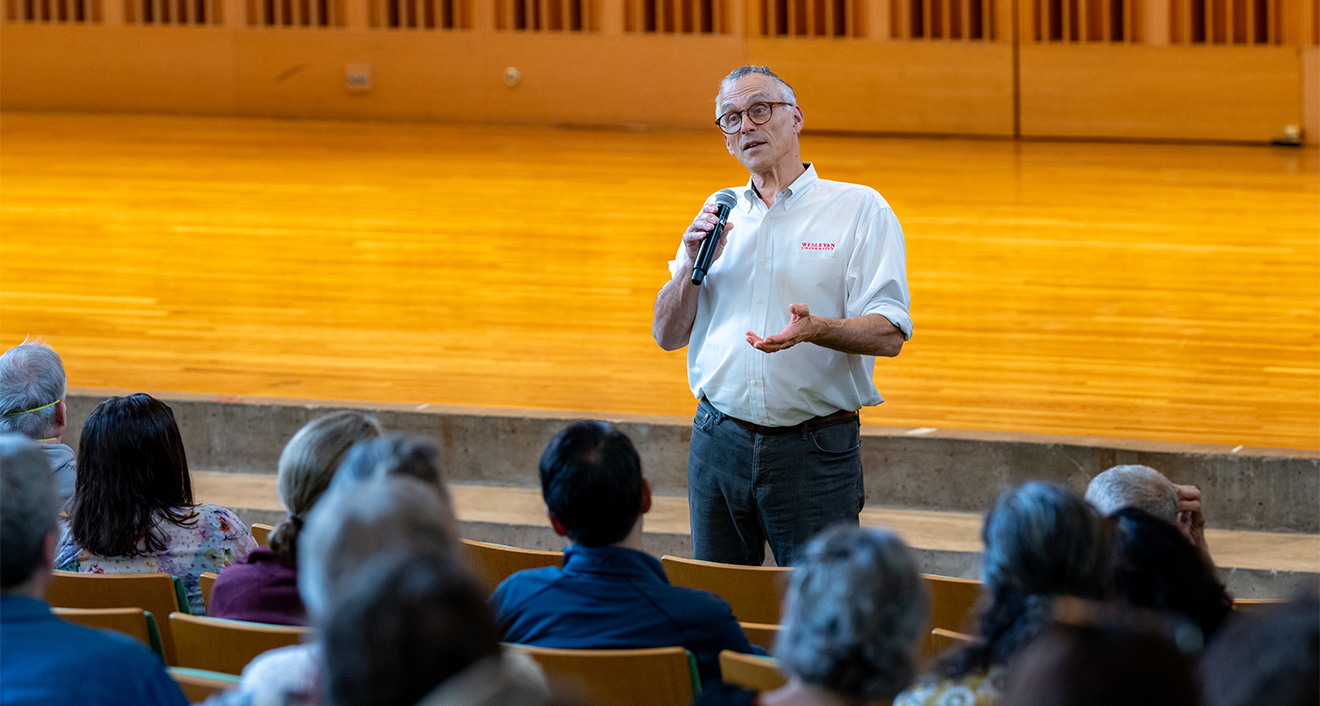
“I think our students should feel free. They should feel empowered. They should feel invited to participate in the public sphere in any way they want to,” said Roth. He described how the University supports that goal with dedicated funding, which students can use to work as interns on campaigns or to register voters. Through these experiences, he said, “I think they'll learn about their country in a way that will be very impactful for them, maybe for the country, but certainly for them as individual students who are learning about the world.”
Seminars, Symposia, and More
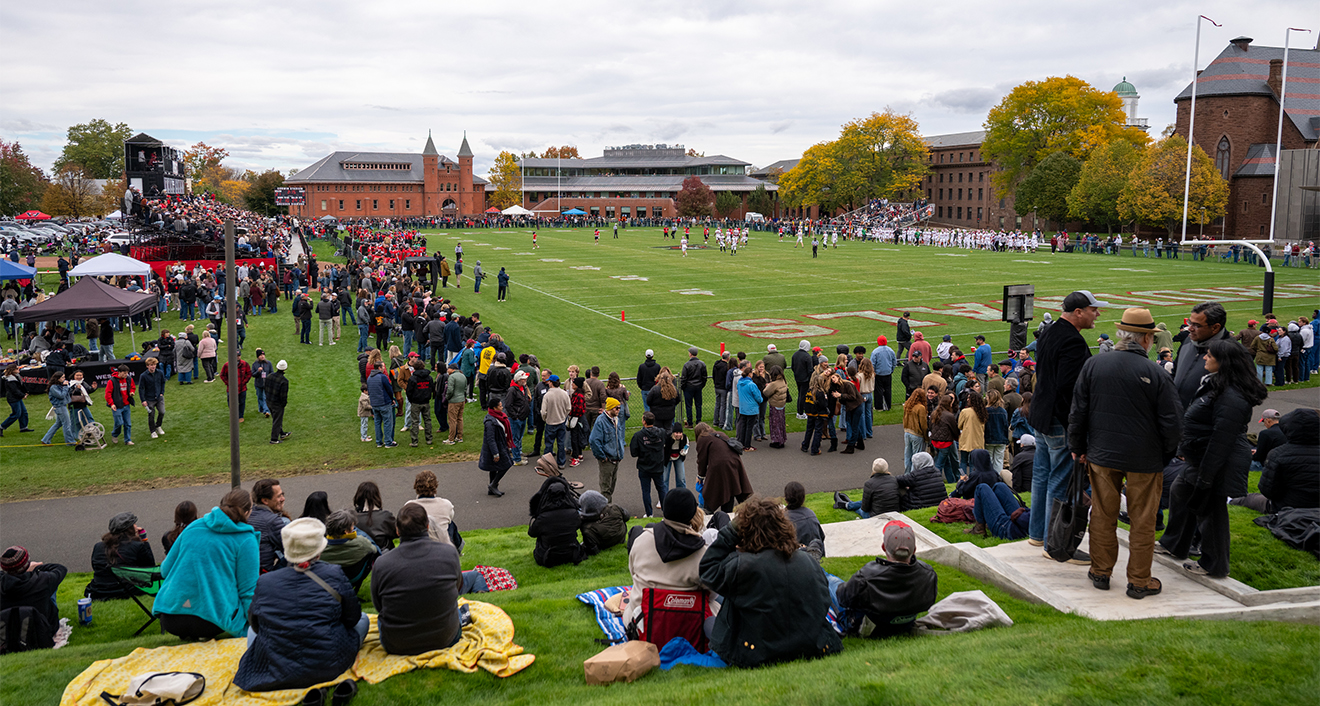
On Saturday, festivities continued with a campus tour, open houses, and tailgating on Andrus Field.
Before joining several baseball team parents at the tailgate, Andrew Lacey ’89, P’28, and over 100 parents and friends of the baseball team, ventured to Dunkin’ Park for the annual Red & Black Scrimmage. He said the tailgate is, “the best environment there is in a NESCAC sport, it’s always fun. I try to get here as often as possible, and I love being out here.”
Lacey, who played soccer as a student, said Wesleyan was the place where he learned to be independent, but he also formed treasured friendships. He graduated with a degree in social studies and spent his first five years teaching before becoming an investment banker. “I think adaptability and confidence to enter new environments is something that happens at Wesleyan,” Lacey said. “It's not tangible to explain how, but it just happens. I went to business school, but I tell everybody all the skills that were applicable to being successful in the business world came from being here.”
 The 34th Annual Dwight L. Greene Symposium was held in Memorial Chapel. This event, which honors the life and work of professor of law, mentor, and friend Dwight L. Greene ’70, is an opportunity for alumni, faculty, and friends to discuss topics of importance to Black alumni, alumni of color, and the Wesleyan community at large. This year’s symposium was centered around the subject of “Life-Changing Science”—a key theme of the weekend.
In the afternoon, alumni gathered for the first “Divine Nine National Convening Panel Discussion,” where representative members of six of the nine Pan-Hellenic organizations shared their experiences with Black Greek life at Wesleyan. Medina Jett ’87, a real estate developer in Atlanta, shared her story of establishing a chapter of the Alpha Kappa Alpha (AKA) Sorority, Inc. on campus when she was a student.
The niece of a Black fraternity member, Jett arrived at Wesleyan determined to pledge AKA. But she quickly learned there were no members on campus. After doing some research and consulting graduate student chapters in the region, she reached out to fellow Black female students to gage interest and made a case to the University administration. Jett and her peers launched the first Black Greek organization on campus in the spring of 1984.
“One of the things I loved about Wesleyan is that it really inspired us to be the change agents,” she said. “And if you see something that's needed, do whatever it takes to make that happen. And so that's what we did.”
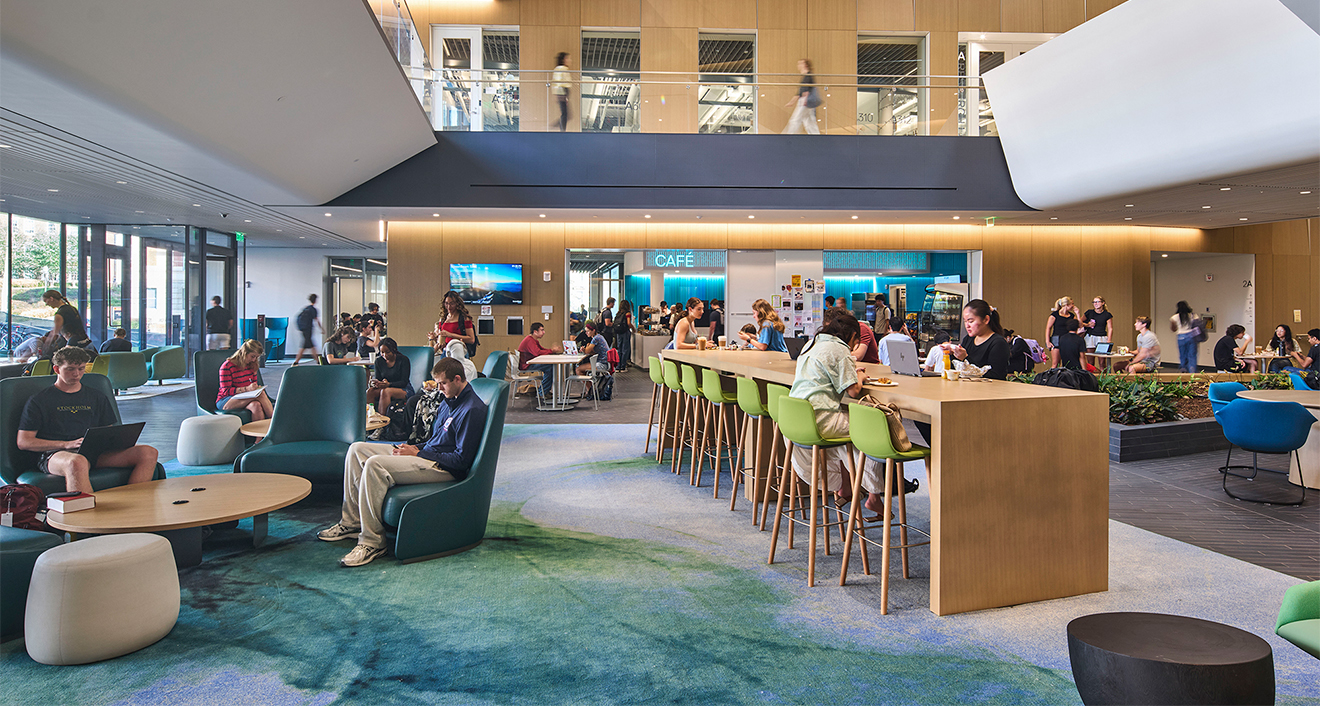
 In keeping with the “Celebration of the Sciences at Wesleyan” theme of the weekend, science faculty held a WESeminar, “Science in a Liberal Arts Community: Why Science Matters at Wesleyan,” event in the newly opened Casper Life Sciences Building. While introducing her colleagues, moderator and Associate Professor of Biology Ruth Johnson said, “I hope that what you're going to get a sense of is the enormous diversity of research that we have on offer and the research that we do here within Wesleyan. The research that we do forms the backbone, actually, of our teaching.”
Faculty from the biology, chemistry, and molecular biology & biochemistry departments described their research in a series of TED Talk-style presentations. They discussed opportunities for students to engage with science through coursework, research, laboratories, and hands-on learning. The seminar emphasized why scientific knowledge matters beyond the sciences and how a liberal arts education prepares students to think critically about science and its impact on society.
After the seminar, parents were invited to tour the new building, which has 39 research and support labs, nine teaching labs, seven classrooms, a vivarium, a greenhouse, conference spaces, and a café.
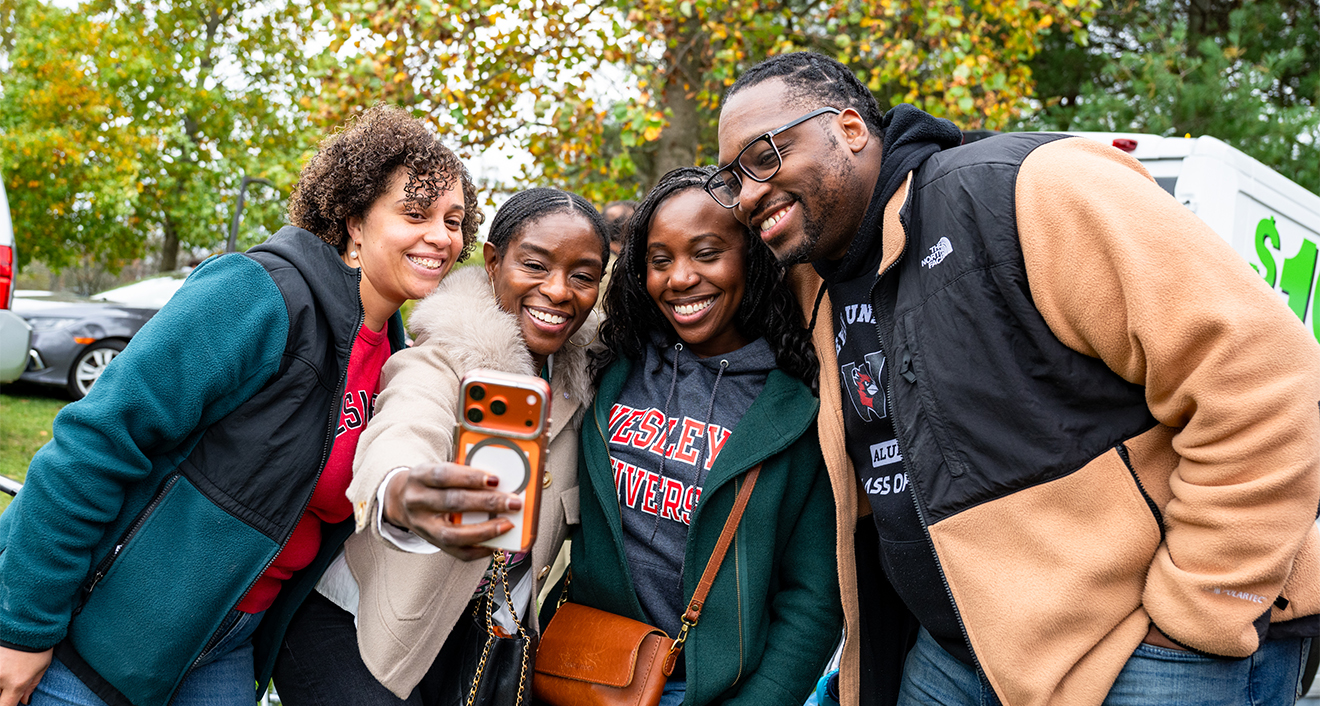
Tara Mould ’08 came to Wesleyan as an international student from Jamaica and found lifelong friends and a love of science on campus. She turned her interest in the sciences into a career as a physician, and she now resides in West Hartford, Connecticut with her husband James Wallace ’05, who she met at Wesleyan, and two children. The family returned to campus to reconnect with friends, especially those at the Divine Nine event as Wallace is a member of Kappa Alpha Psi. She said Wesleyan was her introduction to the United States and helped to open her eyes to the world.
“Wesleyan is just a fantastic place that fosters [curiosity],” said Mould. “Anything you want, anything you can dream of you can dare to dream at Wesleyan. I think it's okay here for you to pose challenges to normal thinking, authority, policy, and just have a free mind.”
Andrew Chatfield and Mike Mavredakis contributed reporting. All photos by John Hassett Photography.