Shasha Seminar Explores the Forces Reshaping the Global Economy
Clean energy. AI and data centers. Money. Those were the three big issues that scholars from Wesleyan and invited experts came to discuss as part of this year’s Shasha Seminar for Human Concerns: A New Global Economic Order.
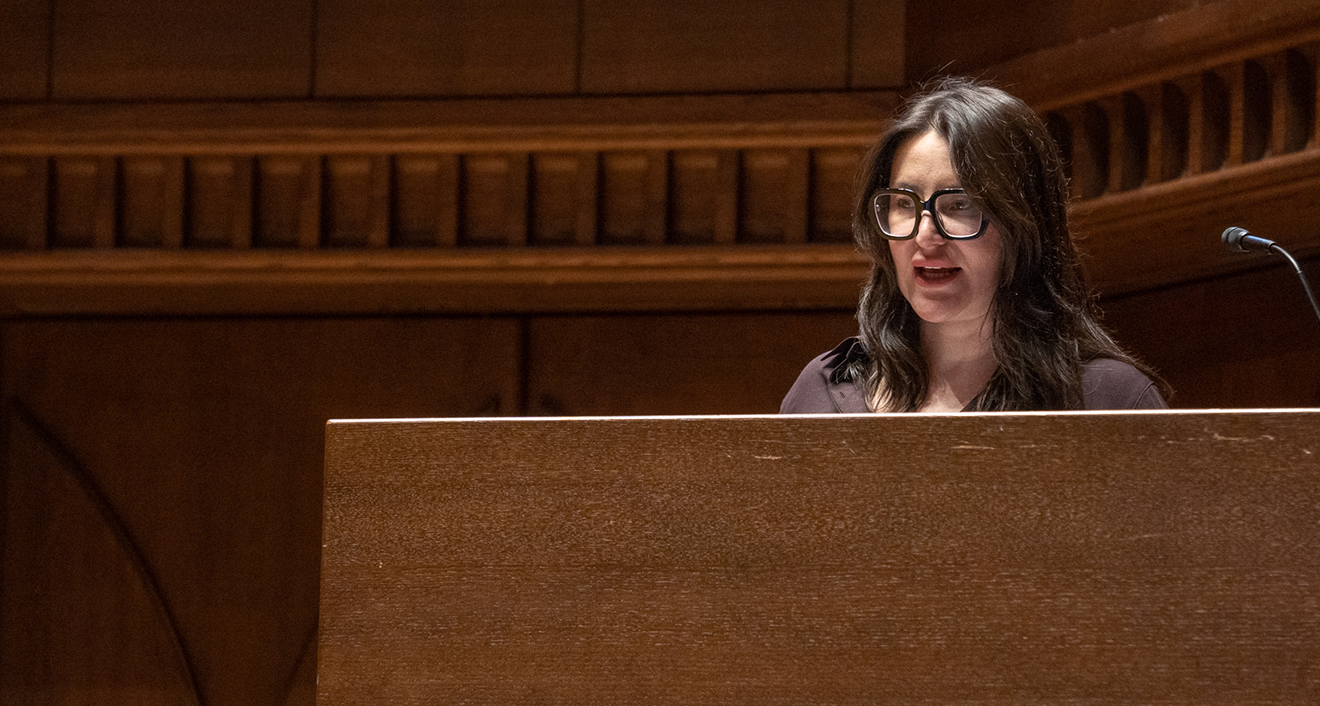
From the podium in Memorial Chapel on Friday, Nov. 13, Professor of Government and Environmental Studies Basak Kus outlined the focus of the weekend. She explained how when she started teaching at Wesleyan more than a decade ago, climate change was not central to political economists like herself. But times have changed.
The focus of nations used to be on decarbonization, or the process of reducing or eliminating carbon dioxide and other greenhouse gas emissions from the atmosphere. But “over the past decades, the conversation has shifted dramatically from taxing and trading carbon to building clean energy, from making dirty things expensive to making clean things cheap,” Kus explained.
That shift is central to the new economic order, Kus said. “So energy, data and AI, and money. Across all three areas, new players are coming onto the stage. Tech giants, middle powers playing the great powers off each other, is the race where green technology and AI take off.”
With those opening remarks, Kus introduced the opening keynote speaker, Dani Rodrik, the Ford Foundation Professor of International Political Economy at the Harvard Kennedy School. Rodrik started his address with a promise of providing an optimistic take on the new global economic “disorder.”
Rodrik described a theory of his that states the world economy was subject to a political “trilemma.” “The political trilemma states that of the following three things, at most two can be added. Those factors include: deep economic integration or hyperglobalization, first; second, national sovereignty; and third, democracy or local political accountability.” His theory holds “that one could have at most two of those three things,” he said.
After tracing the history of global economic policy, Rodrik went on to describe trends, including the reassertion of national sovereignty, the weakening of democracy, as well as the green transition and growth in service jobs worldwide. All of this has occurred without much global cooperation. “I think that all provides a kind of a prospect that we can have a relatively prosperous and well-going world despite global governance arrangements that are largely weak and in disorder,” he said.
Role of China
On day two, the panels addressed topics as wide-ranging as energy transition, China, middle powers, the dollar, and AI. The discussion about China focused on shifts in the global political economic order. Kevin Zongzhe Li, fellow at the Asia Society Policy Institute’s Center for China Analysis, asked his fellow panelists to take stock of what China has done in the last few decades to impact the global economic order.
Kevin P. Gallagher, professor of global development policy at Boston University, started his remarks by noting that while China has had little impact on U.S. dominance of the dollar and global private capital, it has had a greater effect on trade. “They've just become the largest trading economy in the world, second largest economy in the world,” he said. “And so they're dominating the politics of trade and the actual material trade flows around the world.” For middle income countries, China has also emerged as an alternative to global lenders like the International Monetary Fund and the World Bank, he explained.
The third panelist, Angela Huyue Zhang, a professor of law at the University of Southern California, shared her theory about China becoming more like a platform company, such as Apple or Amazon. She described how China allowed Tesla to set up a factory in Shanghai, which was followed by EV supply components—battery manufacturers, charging station operators, electricity suppliers—all in one place. That strategy supported the creation of an innovation ecosystem. “That's what the Chinese government does these days,” she said. “Instead of picking winners or supporting individual players, they get people in, they create infrastructure, and then let them compete.”
In closing, Zongzhe Li asked his colleagues how they might advise the U.S. government in terms of its approach to China. Gallagher focused his response on the Global South. China, he said, went from being one of the poorest countries in the early 80s to a powerhouse today. “They're at the cutting edge of just about every major technology on the planet, and they're global,” he said. “They've got their firms and they're trading and they're lending all around the world.”
Zhang answered by introducing the concept of convergence. “The idea is in the process of … [trying] to slow down and contain China, I'll be becoming more like China,” she said.
Political Economy of AI
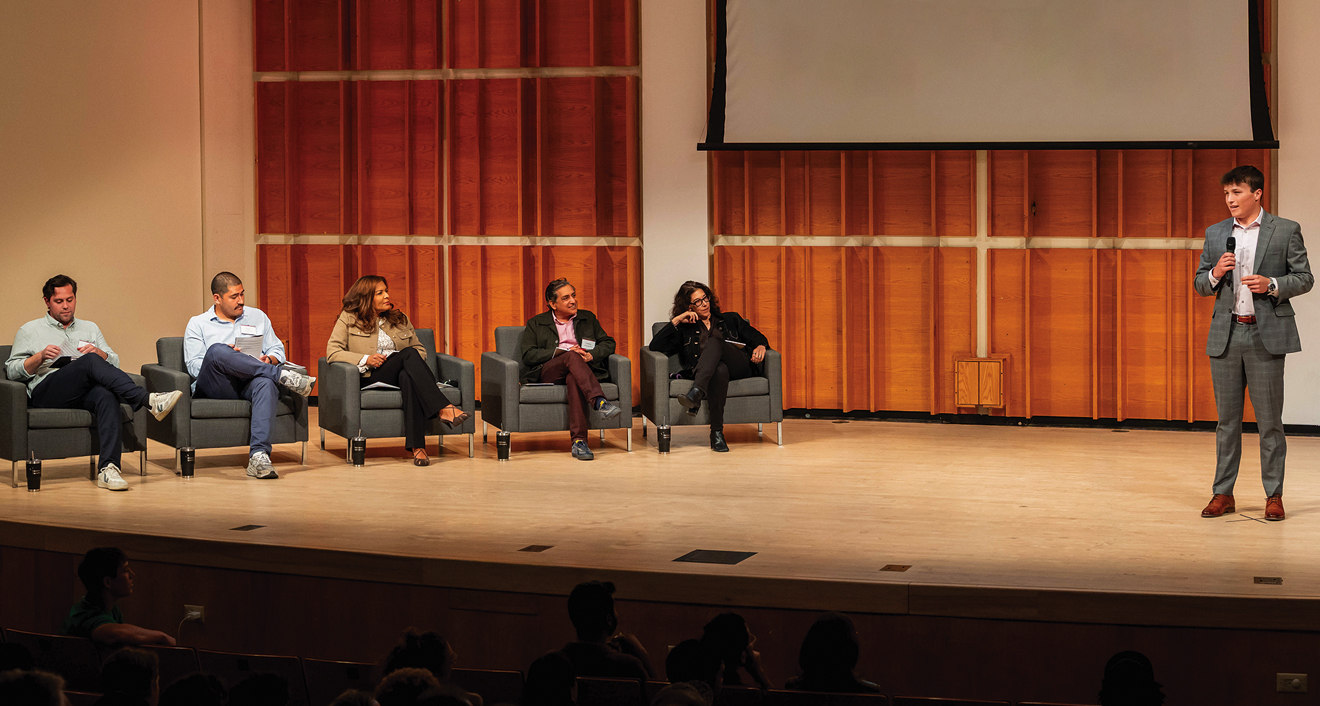
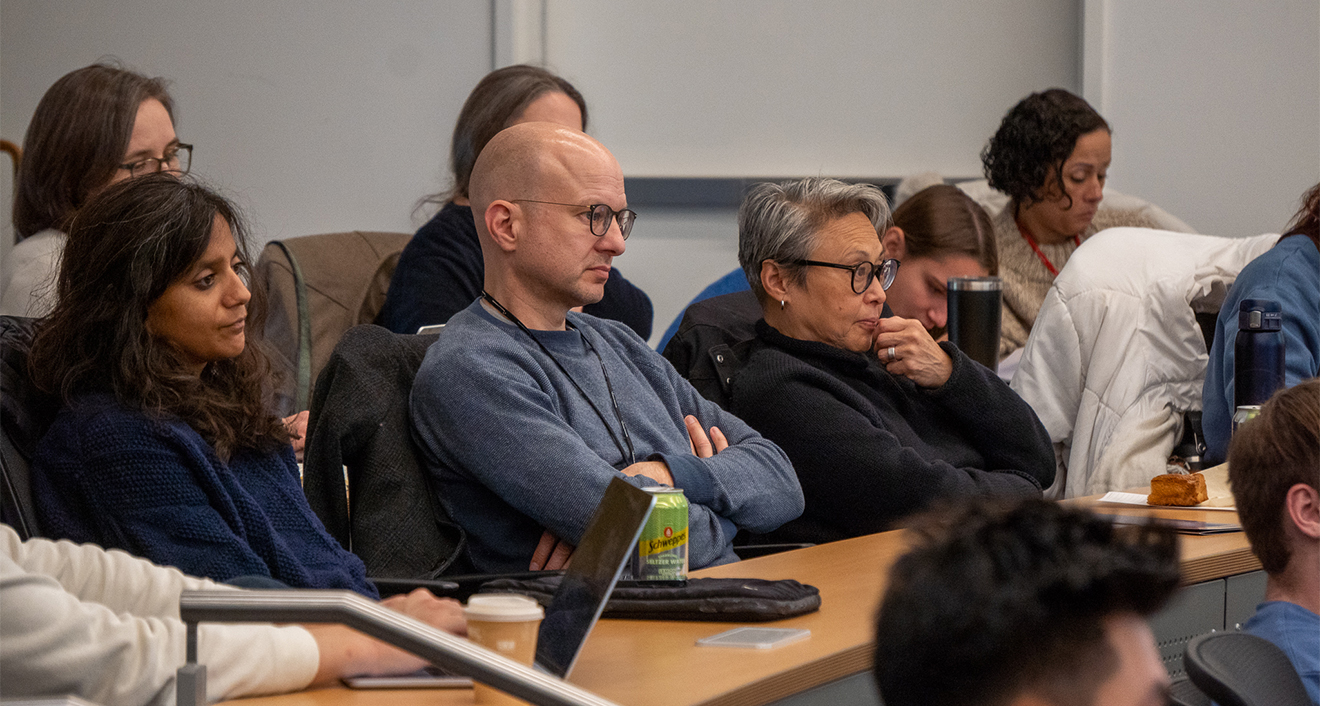
Following two panels on how middle powers and countries in the Global South are navigating the global economic terrain and decoupling from the U.S. dollar, five scholars explored the impact of AI development on labor markets, rising anti-data center sentiments, and competition between nations.
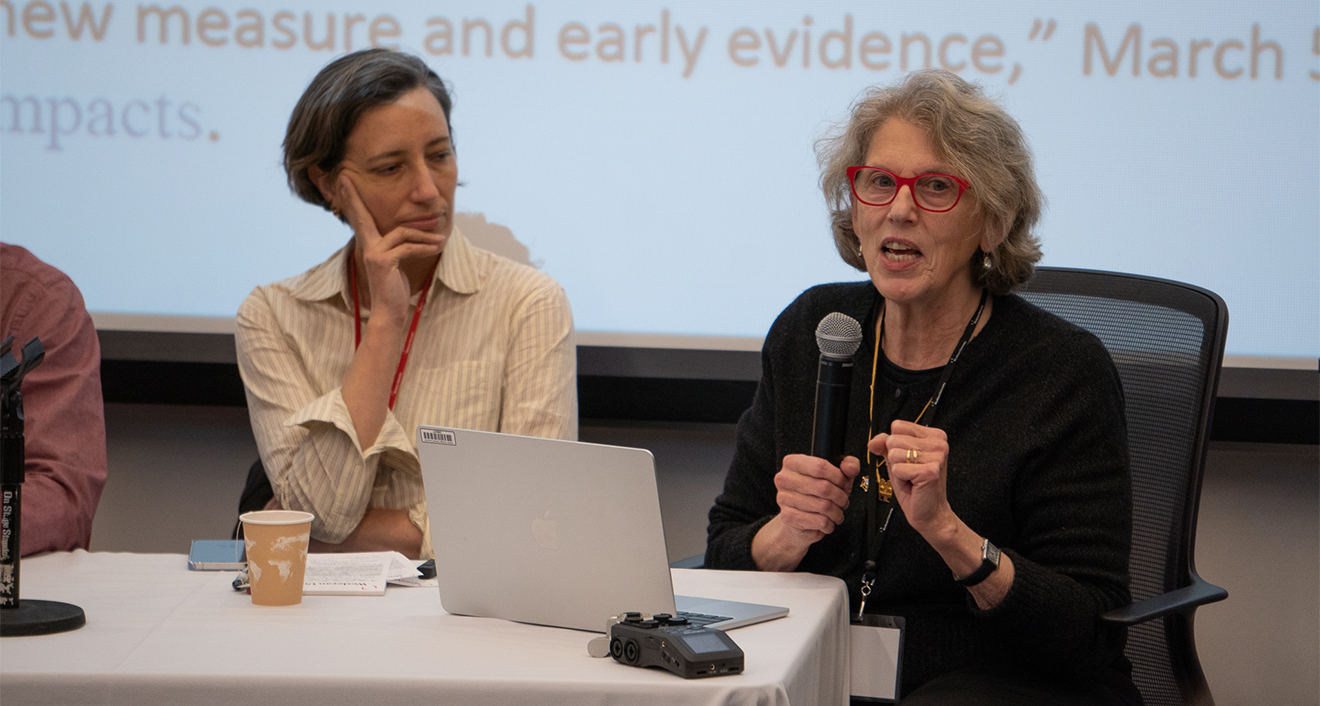
Juliet Schor, economist and professor of sociology at Boston College, said there is great uncertainty about how AI will impact employment, with research suggesting it could disrupt positions in management, business and finance, law, arts and media, office administration, and life and social sciences, among others. One thing that often gets missed in this conversation, she said, is AI’s influence on the hours employees work. During the first industrial revolution in the mid-19th century, the United States saw a sharp reduction in time spent working.
“The technology in use does not determine hours of work, nor does it determine employment. The period 1870 to 1900 saw a very large increase in hours of work, just as all this labor-saving technology was coming in. And it's possible that AI is going to do the same here,” said Schor, who researches the 32-hour work week. “I think we really need to put hours of work into this conversation, or we risk some much worse outcomes in some ways than we've been thinking of.”
Next, panelists discussed the burgeoning and bipartisan opposition to the construction of data centers in the United States, which makes building them difficult. Angela Huyue Zhang said China does not face the same democratic push against data centers, but they do have a utilization problem. “China tends to overshoot, so they built too many data centers in West [China],” Zhang said. “The utilization rate is actually really low. It's about 20 to 30 percent, at least about a year ago. So now the government has to worry about how to deal with all this unused data center capacity.”
Holly Jean Buck, associate professor of environment and sustainability at the University of Buffalo, said the impact data centers have on the availability of resources like land, water, and energy is a driving force of opposition. She said she views the AI problem as mainly an electricity and energy planning problem. Sebastian Zimmeck, professor of computer science at Wesleyan, suggested that AI users start to use smaller models on small problems, rather than using large mainstream models like ChatGPT or Claude. “In my field, for example, taking a small model and training it on data for a very specific task often leads to good enough results, and so I think that could be at least a little contributor to using less energy and resources in general,” he said.
The panelists concluded their talk by discussing AI regulation and the risks to global systems that AI poses. “I think America is facing a big dilemma here,” Zhang said. “You can use all sorts of regulatory tools, antitrust to break up these firms, but inevitably you will undermine America's competitiveness, unfortunately. You can't really have AI supremacy and democracy.”
Globalization and International Coordination
The last panel of the weekend, “The Global Economy—Business, Political, and Media Perspectives,” featured leaders in journalism, economics, and business discussing globalization, international coordination, and trade policy.
David Lynch ’81, global economics correspondent for The Washington Post, said the United States’ push for globalization had many benefits and was an engine for prosperity for over 1.5 billion people globally, but ignored downside risks like the loss of skilled manufacturing jobs. For example, he said economists and policymakers failed to properly project the impact of China’s increasing hold on global manufacturing in the early-to-mid 2000s.
“If you're working in a tire plant out in Tennessee, it doesn't matter to you that Apple is hiring new app designers or Goldman Sachs is hiring new investment bankers. You don't have the skills to join that party,” he said. “In [former President Bill] Clinton's formulation, the government should have done something to help you not become an investment banker, but to upskill and at least be able to enjoy more from civilization. We didn't do that.”
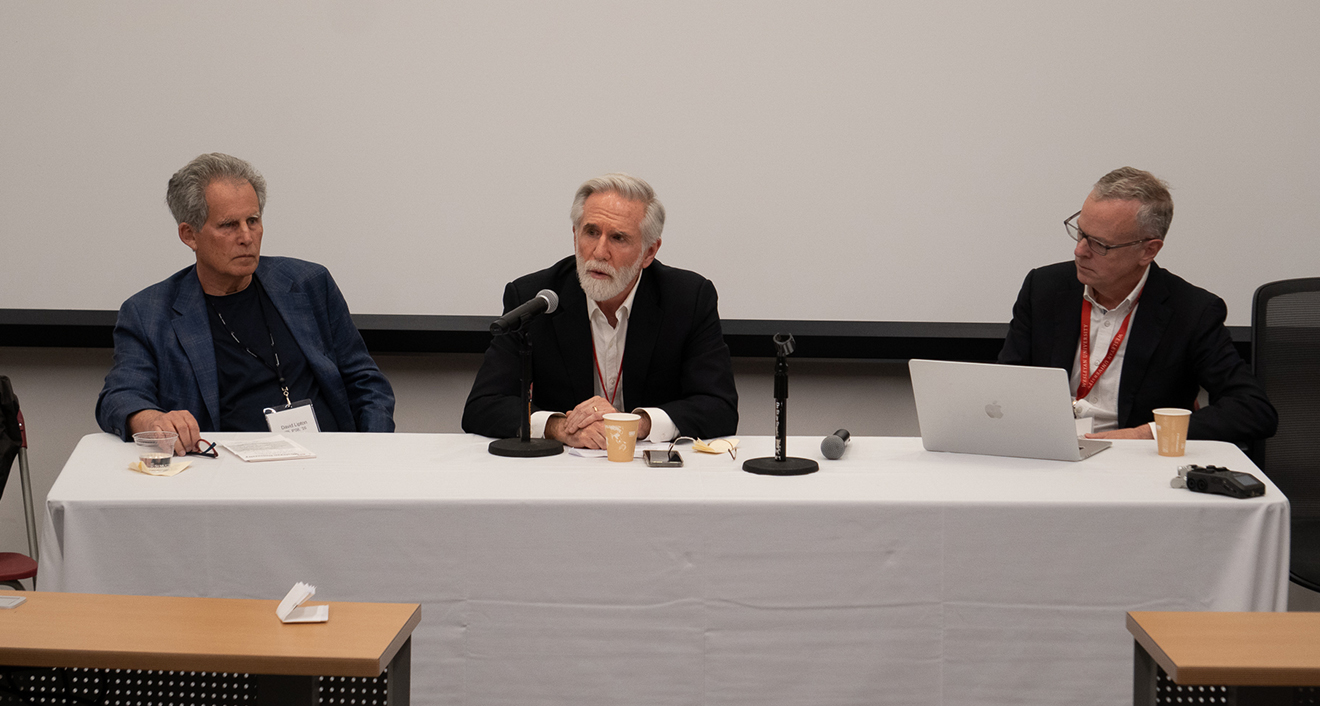
A return to a system of international cooperation in U.S. foreign policy is necessary, said David Lipton ’75, P’08, ’16, an economist who served as counselor to Secretary Janet Yellen at the United States Treasury and as a special assistant to former President Barack Obama. He identified financial regulation, managing AI investment, and preparations to avoid financial instability as key areas where cooperation is needed. “We live in a world of public goods and public bads. We've already experienced the pandemic. We are dealing with climate change. We have concerns about nefarious uses of AI. We have seen some cybersecurity events, and there's certainly a threat of more,” Lipton said. “I find it very hard to imagine that we can manage the world safely, unless we are collaborating on how to deal with these public goods issues.”
Following the global economy panel, Associate Professor of Government Lindsay Dolan wrapped up the weekend’s conversations with considerations for how international cooperation could re-emerge. “We don't know what will come next, but undoubtedly it’s going to consist of a mix of existing governance arrangements that could be reharnessed and adapted to these new issue areas and new dynamics that are emerging, coupled with new governance arrangements that correspond with new issues and new considerations of power,” she said.
This year’s Shasha Seminar was just one event on campus this year that considered economic policy and research, as the Economics Department hosted the Liberal Arts Conference on Development Economics (LACDev) for the first time at Wesleyan this fall. This conference featured in-progress work from economists at liberal arts colleges across the country, on topics ranging from trade to crime and conflict to credit and banking.
The Shasha Seminar for Human Concerns, endowed by James J. Shasha ’50, P’82, supports lifelong learning and encourages participants to expand their knowledge and perspectives on significant issues.
Ziba Kashef contributed to this story.