What Makes a Magazine? Insights from the Shapiro Center Symposium
A congregation. A document of the present. A container of taste. Those were just a few phrases editors used to describe what a magazine is at The Magazine Symposium, a two-day event sponsored by the Shapiro Center for Creative Writing and Criticism at Wesleyan on Oct. 29 and 30.
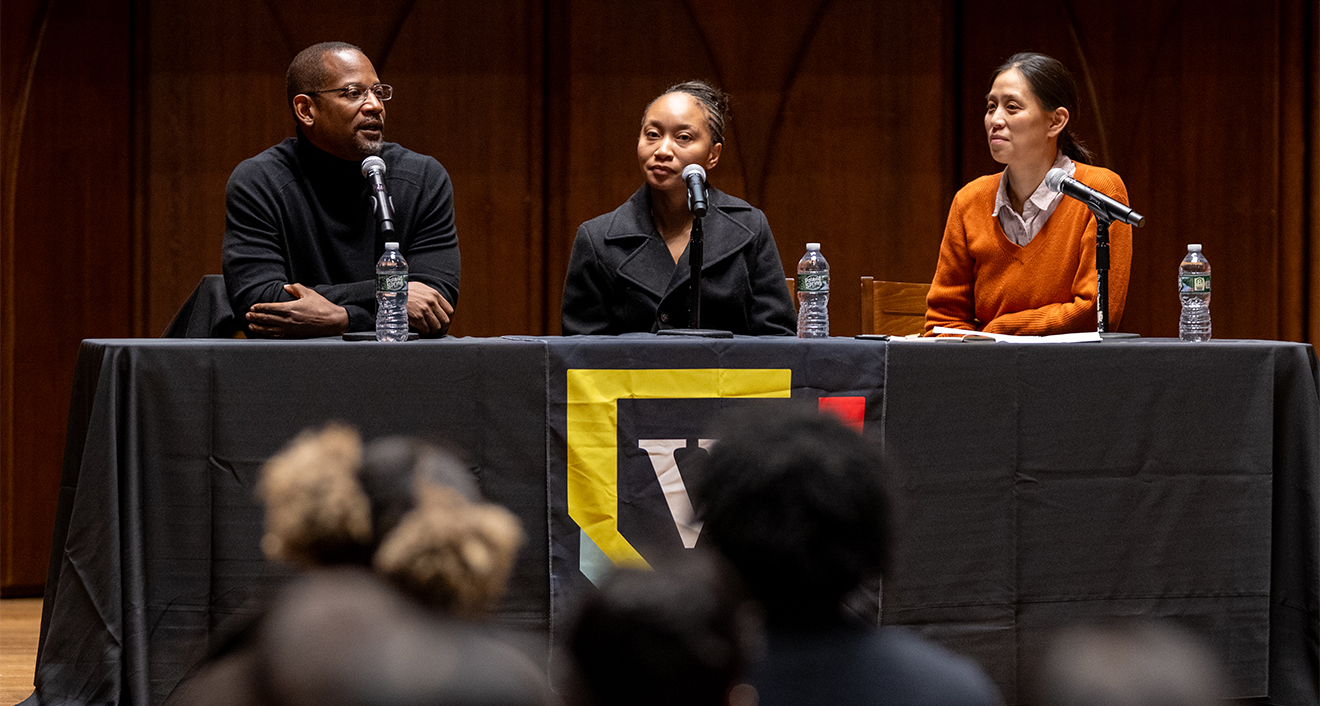
On Thursday, five editors representing a range of relatively new publications shared their insights during the first panel discussion, “How to Start a Magazine,” moderated by Merve Emre, director of the Shapiro Writing Center and Shapiro-Silverberg University Professor of Creative Writing and Criticism.
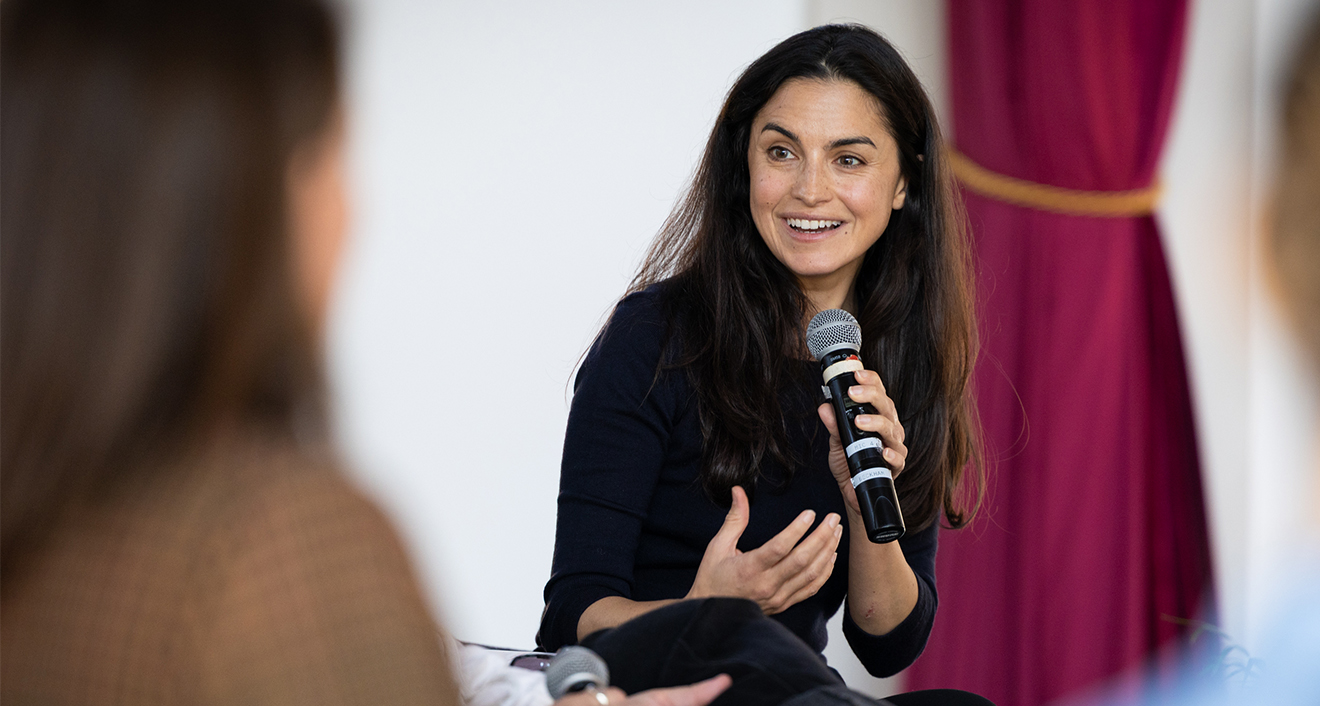
Emre’s first question was about the void that each magazine was trying to fill when they started. The responses from the editors of The Drift, Dirt, Triple Canopy, Kismet, and Now Voyager varied widely from “a space where art, literature, religion, faith, and belief can be worked out,” to “an experimental internet magazine” to “a place where anybody could pitch something really daring and bold.”
From there, the panel turned to topics such as magazine funding, which they said came from subscribers, donors, grants, or some combination of sources. They discussed the unexpected roadblocks of running a magazine, such as staffing issues, operational problems, and even lawsuits over publication titles. They also detailed the challenge of seeking funding from individuals who might hold different political opinions than those expressed in their magazines.
At the end of the discussion when they returned to the question of what a magazine is, Alexander Provan, editor of Triple Canopy, summed it up saying, “a kind of self-organized body that becomes its own social, intellectual, cultural force without you quite knowing how that happened.”
Do You Need to Be in New York?
Another panel, “Magazines vs. NYC,” explored the relationship between the city that has long been known as the publishing capital and the broader magazine industry. The panelists all work in other parts of the country—Georgia, Chicago, Tennessee, and San Francisco—demonstrating that aspiring magazine writers and editors don’t necessarily have to live in the Big Apple to succeed in magazines.
The panelists then shared how their journeys in the field intersected with New York. Most of them lived in New York at some point during their careers and felt that the cultural influence of the city is ever-present but that it was not essential to live there, and it might even be freeing to work elsewhere. “I just want to encourage you to live where you want to live, create the life you want to live, you want to have, and just work on being a good writer,” said Kyle Tibbs Jones, founder and editor of The Bitter Southerner, based in Athens, Georgia.
The panelists went on to discuss how important it is to have a point of view, wherever you are based. Being outside of New York, they said, allowed their publications to explore different perspectives and have more editorial independence. “I think the little magazine world is actually best where we…don't see ourselves involved in a common project but actually are criticizing each other and willing to take real distinctive points of view on the important topics that we're covering,” said Jon Baskin, editor at The Point.
The Believer Editor Daneil Gumbiner also pointed to the outsized influence a local or regional publication can have in its area. “I think outside of New York, in some of these other cities, your magazine can play a really central role in the literary life of a city,” he said. “Starting a magazine in a smaller city or a city that doesn't have as much of a publishing culture, I think, it's a really unique opportunity to impact people's lives.”
Gen-Z and the Future of Magazines
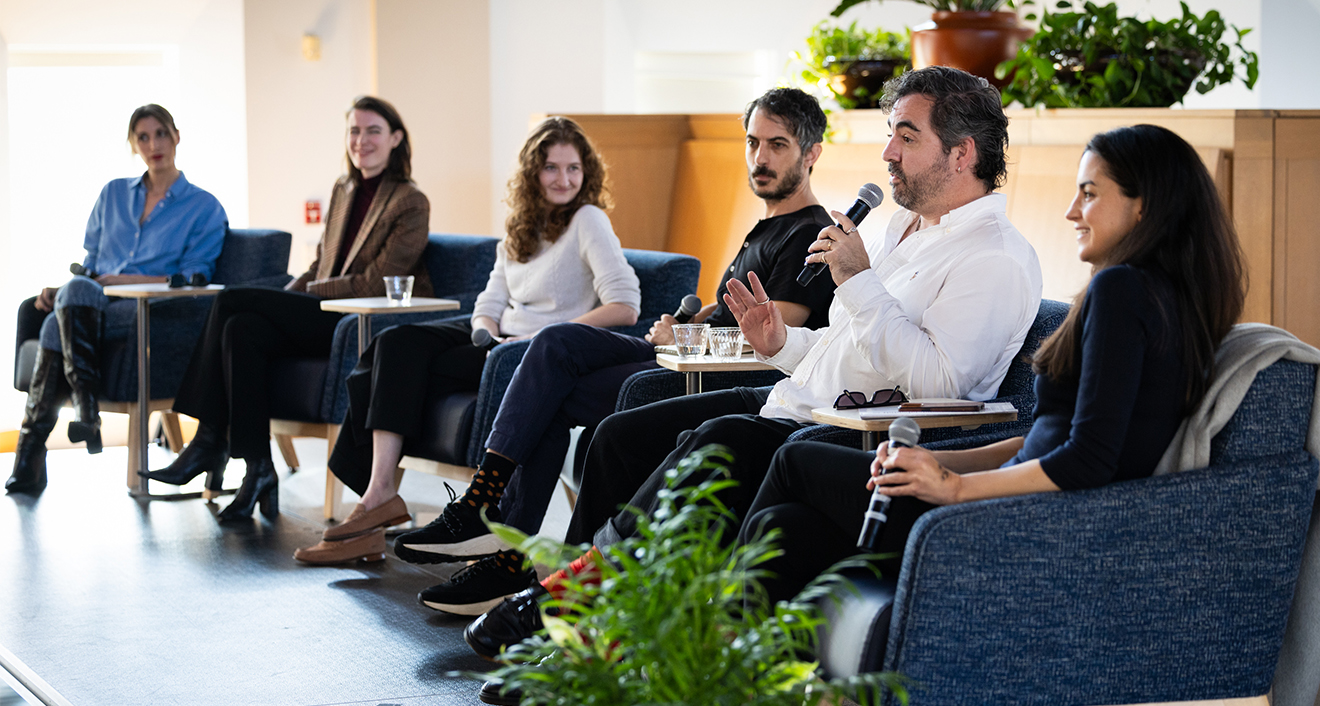
On Friday, five young editors and writers, including two alumni, from New York Magazine, The New York Times Magazine, House House Magazine, The Yale Review, The New Critic, and Dazed explored the ways in which magazines and Gen-Z interact. Their discussion covered topics like what a magazine is, what role magazines can serve in a media environment dominated by short-form content, and narratives surrounding Gen-Z as media consumers.
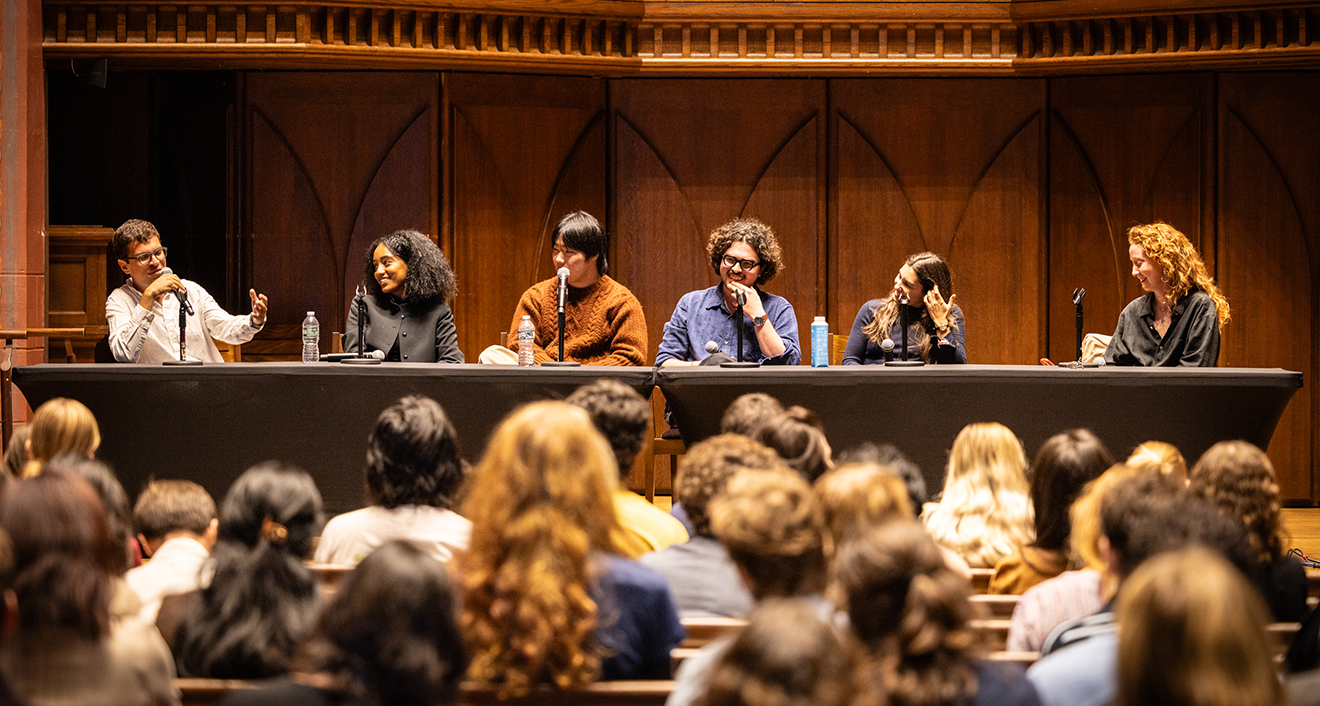
Five young editors and writers discuss the interactions between magazines and Gen-Z, including Elan Kluger of The New Critic (left), Isabel Bekele of Dazed (second from left), Hengzhi Huang Yang of House House Magazine (left-center), Oliver Egger ’23 of The Yale Review (right-center), Charlotte Klein ’19 of New York Magazine (second from right), and Elena Saavedra Buckley of The New York Times Magazine (right). (Photo by Cedric Pilard)
Hengzhi Huang Yang, founder and editor-in-chief of House House Magazine, said he thinks much of Gen-Z is “chronically online” and they consume all types of media, which can make it difficult for magazines to differentiate themselves. He said one thing magazines do well is cover the present, and he thinks they can launch broader discourse that grabs the attention of readers.
“I think great magazine pieces are themselves events. I think they're almost the opposite of journalism, that they don't follow an event, they're themselves the creation of the event,” Yang said. “…I think we need to be as ambitious as the generation of magazine makers in the 20th century where we need to create pieces that define an age and help define our age.”
The panel also discussed the value of reporting, especially in the artificial intelligence age where the veracity of public information is constantly under scrutiny. “I think that AI has just made good reporting so much more valuable, because an AI blog cannot elicit, in the same way, information out of people,” said Charlotte Klein ’19, features writer and media columnist at New York Magazine. “I do feel like, in my world, there's this new premium on really good reporting.”
What are Magazines For?
To wrap up the two-day series of talks, editors from The New York Times Magazine, The New York Review of Books, The Yale Review, The Point, and Granta joined in a conversation about what magazines are for, what anxieties they hold about the industry, safeguarding the fundamentals values of magazines, and how publications can be affected by a turnover in leadership. Their discussion was moderated by Emre.
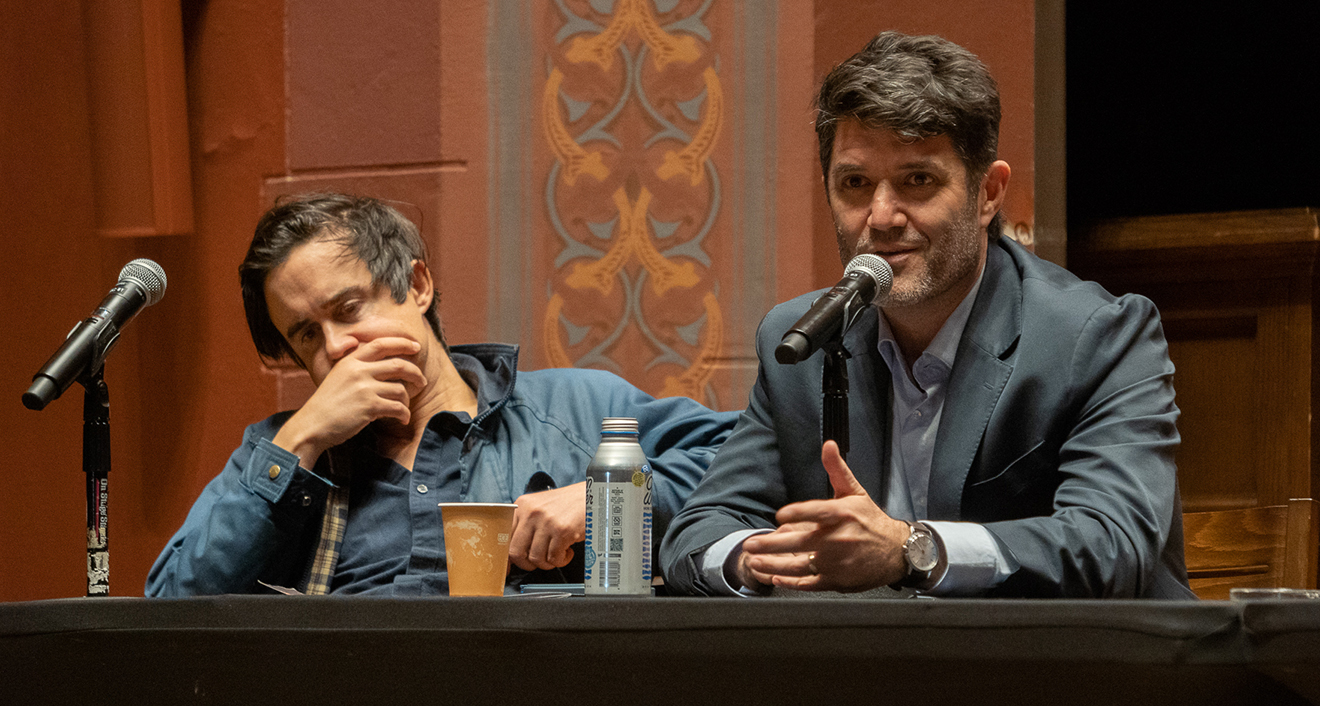
Jake Silverstein ’98, editor-in-chief of The New York Times Magazine, said he worries about how magazines make the transition to digital platforms. His magazine routinely publishes long-form pieces, which audience members read on their phones at the same time they are flooded with notifications and distractions, he said. “I think all of us who work in magazines are engaged in this slow, and sometimes rather arduous, process of figuring out how magazines and all print media are going to make a transition into whatever digital media will mean to future generations,” he said.
Panelists concluded the conversation with questions from the audience on how the results of Election Day may affect their future coverage, how magazines can make sure they are visible to audiences, and incorporating humor into the magazine experience.
Mike Mavredakis contributed to this story.